
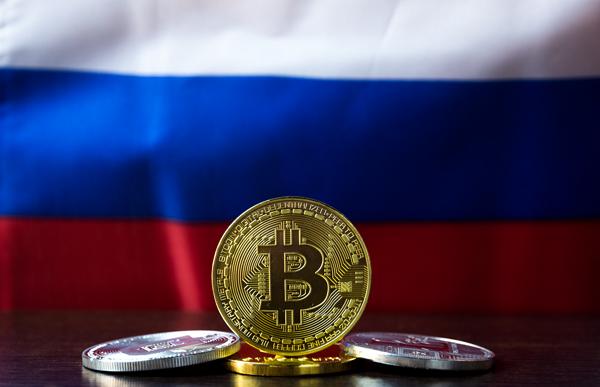
As Russia’s new legal framework for cryptocurrencies takes effect from Sept. 1, the country’s largest bank Sberbank forecast the domestic crypto trading market could grow to as much as 4 trillion roubles, or about $46.4 billion, in the first year of the regime. Sberbank is also preparing to expand collateral assets beyond bitcoin-backed loans to include ether and tether (USDT).
Blockchain outlet Decrypt reported on Aug. 31, local time, that Sberbank Vice President Anatoly Popov (아나톨리 포포프) said in an interview with Russian state news agency TASS that crypto trading could reach up to 4 trillion roubles in the first year under the new regime. He said the trading volume could expand to 7.5 trillion roubles, or about $87.0 billion, by 2029 if the market continues to grow.
Popov said the forecast was a conservatively estimated figure. He cited the possibility that many trades may continue to take place through crypto exchange services rather than official exchanges, and that the deadline for professional market participants to obtain licences runs until July 1, 2027, making it difficult for the market to fully settle within a year of the regime taking effect.
Sberbank plans to expand its lending business using cryptocurrencies. Popov said the bank is preparing a plan to accept not only bitcoin but also ether and the stablecoin USDT as collateral. He added the plan would be possible only if the central bank allows the general circulation of those assets.
Sberbank’s plan is becoming more concrete as the Bank of Russia recently presented a draft list of assets eligible for public trading. The central bank selected candidates based on market capitalisation, trading volume and at least five years of price history, and the list included bitcoin, ether and USDT. Other tokens, including XRP, were not included.
The expansion of crypto-backed loans is also seen as being influenced by Russia’s high interest rate environment. Russia’s key rate is at around 14 percent. Miners and other holders of cryptocurrencies would have to forgo potential gains from future price rises if they sell their holdings, but borrowing against crypto collateral allows them to secure funds while continuing to hold the assets.
Sberbank has already gained experience in bitcoin-backed loans. In December last year, it ran a pilot programme with mining company Intelion to lend against bitcoin as collateral. It has been preparing to expand related financial products ahead of the new regime’s launch.
Variables remain before any product launch. Sberbank has not yet disclosed the loan-to-value ratio, interest rates or a specific launch timeline. The expansion of collateral loans to include ether and USDT also depends on further approval from the Bank of Russia.
Russia is set to introduce new rules from September covering crypto trading, custody and cross-border payments. It will continue to ban the use of cryptocurrencies to pay for domestic goods and services. As a result, the pace of actual growth in Russia’s crypto market is expected to depend on the scope of permitted trading and the progress of licensing for market participants.
 Jinju Hong
hongjj@d-today.co.kr
Jinju Hong
hongjj@d-today.co.kr