
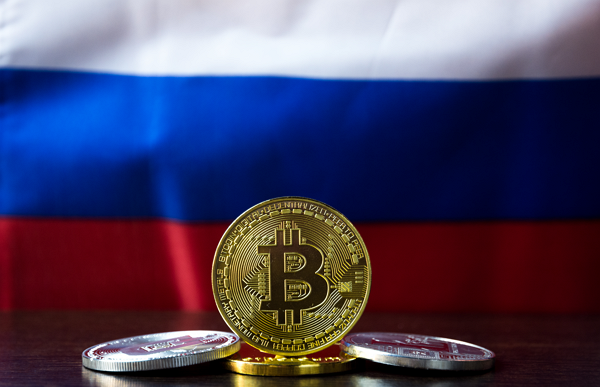
Russia's largest bank Sberbank (Sber) is seeking to expand crypto-backed lending by recognising ether and Tether's USDT as collateral, following bitcoin.
On Aug. 30, blockchain media outlet Cointelegraph and TASS and other foreign media reported that Sberbank plans to adjust existing products and gradually broaden the assets it handles in line with the implementation of Russia's new crypto legislation.
Anatoly Popov (아나톨리 포포프), a deputy chairman at Sber, said the bank will overhaul products now in operation to fit the new system and gradually expand the scope of services. He said actual expansion of collateral will take place after the Bank of Russia allows public trading of the assets. Popov said Sber plans to add ether and USDT to its collateral assets alongside bitcoin.
The move comes as Russia begins introducing a regulated crypto market. Russia is seeking to launch a regulated crypto market under a new law signed by President Vladimir Putin on Aug. 4. Key provisions take effect from Sept. 1. The law stipulates that the Bank of Russia will decide which cryptocurrencies can be traded on regulated exchanges.
The Bank of Russia on Aug. 11 named bitcoin, ether and USDT as candidates for trading on regulated exchanges. The central bank judged that these assets met requirements such as market capitalisation, trading volume and at least 5 years of price history in overseas markets. That links Sberbank's plan to expand collateralised lending directly to the central bank's permitted scope.
Sberbank, unlike the broader push to institutionalise the market, has taken a relatively cautious stance on the digital ruble. Taras Skvortsov (타라스 스크보르초프), Sber's chief financial officer, said there is no clear interest beyond the central bank, and that individual customers, corporate customers and financial institutions are not actively pushing the digital ruble.
In this situation, Sber's direction can be read in 2 ways. One is a move to expand related products by linking major cryptocurrencies permitted for trading under the new legal framework to collateral-based finance. The other is that, separate from the central bank-led digital ruble, banks are judging product viability based on actual customer demand.
That makes the next point to watch which assets the Bank of Russia will ultimately allow for regulated trading after Sept. 1, and when Sber will actually incorporate ether and USDT into loan collateral beyond bitcoin. For the digital ruble, whether banks and customers follow through with participation, rather than the launch of the system itself, remains a variable that will determine the pace of its spread.
 Yoonseo Lee
yslee@d-today.co.kr
Yoonseo Lee
yslee@d-today.co.kr