
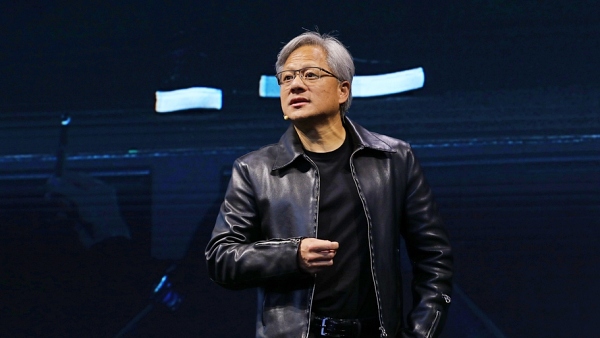
Nvidia CEO Jensen Huang (젠슨 황) stressed that the United States must continue to accept top overseas talent to maintain its technological competitiveness.
Business Insider reported on Oct. 15 that Huang, a Taiwan-born immigrant, said, "We want great talent from all over the world to come here and bring great ideas," adding, "The intellectual property flowing into this country is without precedent globally."
The comments run counter to the Trump administration’s push to tighten immigration restrictions. The administration has expanded enforcement across immigration, including the H-1B visa, a key entry route for tech workers. Huang added the premise that immigration must be legal, but stressed that balance is needed between attracting overseas talent and operating the system.
The White House maintained that foreign talent is not essential to the U.S. labor market. A White House spokesperson said there are enough people and talent in the United States to grow the workforce, and that U.S. President Donald Trump’s job policy focuses on tapping that potential.
Trump signed an executive order in September last year imposing a $100,000 fee on new H-1B applications. Amazon, Microsoft, Alphabet, Meta and Apple were cited as leading companies that frequently sponsor H-1B visas.
Last week, Vice President JD Vance and U.S. government officials announced at a news conference that they would exclude Microsoft and Adobe from a federal visa sponsorship program. The program links H-1B visas with the acquisition of permanent residency. Vance claimed that "every time Microsoft laid off 1 worker, it replaced them with 1.5 foreign contract workers."
Huang’s comments are drawing more attention because he has been seen as relatively close to Trump in the tech industry. Last month, Huang said some artificial intelligence executives were stoking fear about AI with other intentions, and that the focus should be on applying existing regulations rather than adding more.
Trump received calls for regulation from some AI company executives after a series of uncontrolled AI incidents, but ultimately chose an approach closer to Huang’s view. Against that backdrop, the immigration remarks are being read as another case highlighting where to place talent acquisition in the technology supremacy race, including AI and semiconductors.
Of the 6 CEOs who received a National Medal of Science and Technology at a White House event on Oct. 8, only 1 was U.S.-born. The rest were all foreign-born, including SpaceX’s Elon Musk, Microsoft’s Satya Nadella, Google’s Sergey Brin and AMD’s Lisa Su. The fact that many core figures in the U.S. tech industry have immigrant backgrounds also remains in the background to this debate.
 Yoonseo Lee
yslee@d-today.co.kr
Yoonseo Lee
yslee@d-today.co.kr