
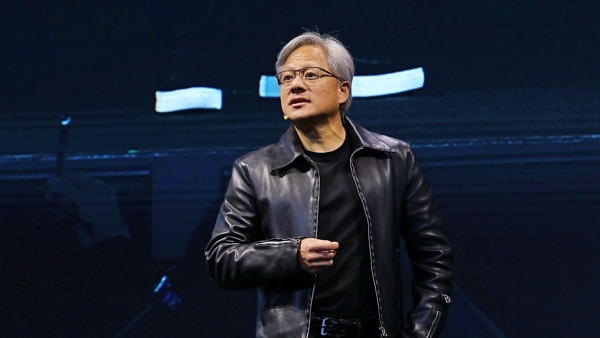
Nvidia Chief Executive Officer Jensen Huang (젠슨 황) said criticism that artificial intelligence data centres put a burden on power grids could instead become a catalyst for investing in power infrastructure and cutting energy costs.
Business Insider reported on Aug. 27 that Huang said the industry needs to change how it persuades local communities as it expands AI infrastructure in the United States.
In an interview with CNBC, he said the technology industry and construction groups should work more closely with communities so they can prepare for expanding AI infrastructure. His remarks reflect a view that the industry has not sufficiently explained the need and benefits of attracting facilities as concerns grow about data centres' power demand and environmental burden.
He also presented data centre construction as one pillar of U.S. reindustrialisation. He said data centres can contribute to sustainable energy investment, power-grid upgrades and energy supply, and are an opportunity to lower energy costs. He cited large-scale market demand and capital inflows as reasons such investment has become possible.
Concerns have long been raised that expanding data centres could be a factor pushing electricity rates higher. Massachusetts Institute of Technology researchers analysed that consumer costs could be lowered if data centres shift their power use to off-peak hours. They said adjusting usage could reduce average energy costs by up to 4 percent in the Mid-Atlantic region, 5 percent in Texas and 2 percent in 11 western states.
The remarks come as Nvidia's data centre business grows rapidly. Nvidia said fiscal 2026 second-quarter data centre revenue was $89 billion, up 117 percent from a year earlier. That again underscores that expanding AI infrastructure is a key driver lifting Nvidia's results.
Huang also warned that U.S. competitiveness could weaken if the expansion of data centres slows. He said, "U.S. communities and society, companies and people all have to embrace the technology," adding, "If not, we will fall behind." He highlighted that building data centres to meet rising AI demand is not simply real estate development but a national-level issue of industrial competitiveness.
The problem is that the mood in the United States is worsening. Texas Governor Greg Abbott ordered measures that effectively halt new data centre construction until a comprehensive audit of state government agencies is completed. In an interview with ABC, Abbott said the industry brought the backlash on itself, saying, "They dug their own grave," and adding, "Residents' opposition is natural."
That leaves the U.S. AI industry with a task that goes beyond chip supply and competition for investment and includes resolving power-grid constraints and community acceptance. The clash between industry claims that data centres can spur grid improvements and residents' concerns about cost-of-living burdens and local environmental impacts is likely to remain a key variable for future infrastructure expansion.
 Yoonseo Lee
yslee@d-today.co.kr
Yoonseo Lee
yslee@d-today.co.kr