
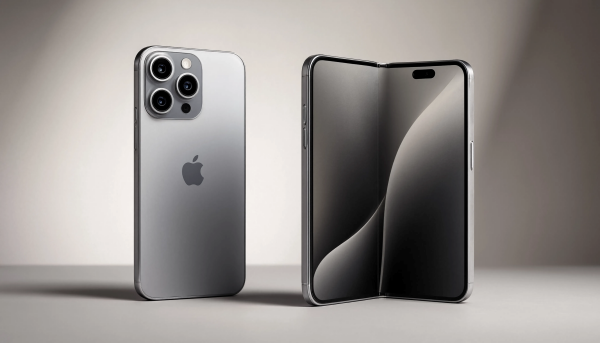
[DigitalToday reporter Yoonseo Lee (이윤서)] An analysis says the iPhone 18 Pro could have an edge in real-world use over the iPhone Ultra among Apple’s next-generation flagship models ahead of their unveiling.
NineToFiveMac reported on Aug. 27 that the iPhone Ultra, known as an “ultra-slim foldable”, is promoting a new form factor. But it said the Pro line could have an advantage in the camera, battery, biometric authentication and telephoto shooting.
The first difference cited is the main camera. Observers say the iPhone 18 Pro could adopt a variable aperture. If added, it could widen options for Portrait mode and depth effects and improve low-light shooting. But parts needed for the feature are expected to be larger than current main-camera components, raising the possibility it could be omitted from the iPhone Ultra, which is expected to opt for an ultra-thin design.
On battery, the iPhone 18 Pro Max is likely to offer the longest usage time. Its physical battery capacity is expected to be 10 percent larger than the iPhone 17 Pro Max. With improved power efficiency from the A20 Pro and C2 chips, it could post the best battery life ever, according to the analysis. By contrast, the iPhone Ultra may struggle to match the Pro Max because of its ultra-slim structure and smaller battery.
Biometric authentication was also cited as a factor that could separate the two products. The iPhone Ultra may have difficulty accommodating Face ID components due to its foldable structure and thinness. Adding components to both the outer and inner displays would require twice as many parts. The iPhone 18 Pro, by contrast, is expected to keep the Face ID system that has continued for nearly 10 years. The Pro line could hold a clear advantage in authentication convenience, the analysis said.
The telephoto camera was also pointed to as a differentiator. While the iPhone 18 Pro and Pro Max are expected to include a telephoto camera, the iPhone Ultra may come only with a main camera and an ultra-wide camera. Observers also say Apple could further widen the telephoto camera’s aperture this year, potentially widening the gap in zoom performance.
The iPhone Ultra’s strength lies in being “foldable” itself. A foldable structure with outer and inner displays could offer a different user experience from existing iPhones. But it is also something users may need time to adapt to. The need to fold and unfold the screen, and screen sizes and ratios that differ from existing iPhones, could feel unfamiliar to some users.
The familiarity offered by the iPhone 18 Pro was also cited as a strength. A familiar form that can be used immediately without adaptation, proven biometric authentication and a camera setup that includes a telephoto camera align with mainstream preferences. If the foldable iPhone focuses on differentiation, the iPhone 18 Pro is likely to emphasise stability and completeness.
Ultimately, the key to this comparison lies in design priorities rather than price. The iPhone Ultra could give up some features for a new form factor, while the iPhone 18 Pro could evolve by raising the completeness of its camera, battery and authentication system within the existing bar-style smartphone structure. The standard for the premium iPhone lineup is expected to change depending on Apple’s final product configuration.
 Yoonseo Lee
yslee@d-today.co.kr
Yoonseo Lee
yslee@d-today.co.kr