
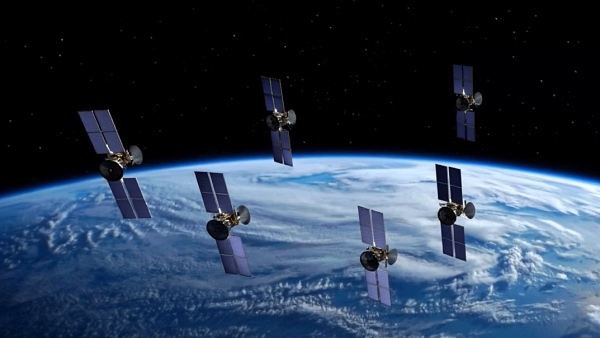
Russia's satellite internet network Rassvet-3 is suffering satellite losses and delays in raising orbits. TechRadar reported on Aug. 27 local time that some satellites from two launches this year have stalled or descended without reaching their target altitude.
Bureau 1440, which is developing Rassvet-3, launched satellites in March and July 2026. But among the first batch, Rassvet-3 No. 4 failed to raise its orbit after rocket separation. The satellite was registered as NORAD 68363 and was lost after re-entering the atmosphere on June 6.
In the second batch, No. 17 and No. 23 showed a similar pattern. Since separating on July 19, no manoeuvre has been observed to move them to a higher orbit. Their current average altitude is about 290 km, with a low point of about 277 km. Without engine burns it is difficult to prevent an altitude drop, raising the likelihood of re-entry.
Some satellites have begun raising altitude, but none has yet reached the target orbit of about 800 km. The initial operational batch launched a little over 5 months ago is also remaining in the 500 to 550 km range. Some other satellites from the same launch failed to reach even that intermediate altitude.
Bureau 1440 has also halted additional orbit-raising for some Rassvet satellites. The company did not disclose the reason for the suspension.
Russia plans to provide high-speed internet service with hundreds of satellites to compete with SpaceX's Starlink. Authorities said they would start commercial service in 2027 and operate 292 satellites in orbit by the end of that year. To meet that schedule, additional launches must continue rapidly over the coming months.
A variable has also emerged at the ground production base. A claim surfaced that Ukrainian forces struck the Progress Rocket Space Center in Samara with FP-5 Flamingo cruise missiles. The facility produces the Soyuz-2.1b rocket that carried all Rassvet-3 satellites launched this year. It also supports launches for military, reconnaissance and communications missions.
Soyuz-2.1b production capacity is cited as a key bottleneck that determines the pace of the Rassvet buildout. If damage at the Progress facility continues, it could also increase pressure on the schedule to operate 292 satellites by year-end.
 Hyunwoo Choo
cookinpapa@d-today.co.kr
Hyunwoo Choo
cookinpapa@d-today.co.kr