
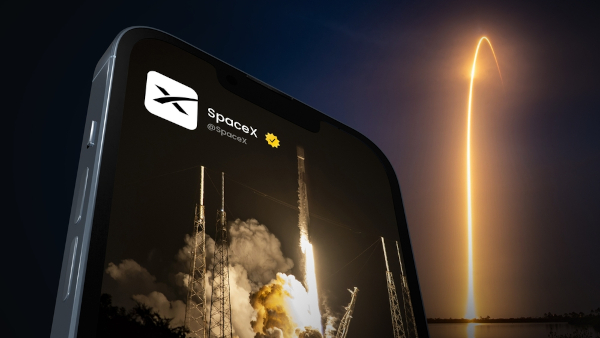
SpaceX will sharply cut the number of launches from Florida for the rest of this year. It plans to effectively end Starlink missions that have been carried out from Florida and continue Starlink launches mainly from Vandenberg Space Force Base in California until Starship is introduced.
Ars Technica reported on Aug. 25 that SpaceX's monthly launch count from its Florida spaceport could fall to around 2 from 8 to 9.
The change centers on moving the Starlink launch hub. SpaceX has launched Falcon 9 rockets mainly from Cape Canaveral Space Force Station in Florida and NASA's Kennedy Space Center. There were 165 Falcon 9 launches last year, and about 75 percent were Starlink satellite missions. This year, the share of launches from Vandenberg has increased, and that trend is expected to continue through year-end.
Kiko Donchev (키코 돈체프), SpaceX vice president for launch, called the Falcon 9 launch carried out at Cape Canaveral early on Aug. 25 the last scheduled Starlink mission from Florida. He wrote on X that future Starlink missions departing Florida will be carried out by Starship, while the West Coast team will continue launching Starlink regularly from Vandenberg.
Florida will now focus Falcon 9 and Falcon Heavy on delivering customer payloads instead of Starlink for the time being. The next launch is NASA's Nancy Grace Roman Space Telescope mission scheduled for Aug. 30. A crewed Falcon 9 mission to send 4 astronauts to the International Space Station is also scheduled for mid-September.
Starlink launches have played a big role in Florida spaceports keeping their position as the world's busiest launch hub. Cape Canaveral and Kennedy Space Center share adjacent land and the same launch range, and are effectively regarded as a single spaceport. The last time the site lost the No. 1 spot globally in launch counts was in 2015.
Without Starlink launches, Florida's overall launch count is bound to drop sharply. Still, the change is less about a reduction in SpaceX's launch capability than a shift to the next stage of its Starlink launch strategy.
The launch also mattered because it set a new Falcon 9 record. The Falcon 9 first-stage booster used in the launch successfully completed its 37th flight, setting a new reuse record for SpaceX.
Donchev praised the team's achievement and stressed that Falcon 9 has become the most reliable launch vehicle in history. He also said Falcon 9 supported the buildout of a large low-Earth orbit satellite constellation that provides connectivity to millions of people worldwide and laid the groundwork for moving to the next stage.
SpaceX's next stage is Starship. The company is maintaining its plan to begin launching Starship and Super Heavy from Launch Complex 39A at Kennedy Space Center by the end of this year.
But uncertainty remains over the actual schedule. A substantial amount of preparation work is still left, and there has not yet been a clear movement to transfer Starship from the production base in southern Texas to Florida. As a result, some 전망 say the first Starship launch from Kennedy Space Center is more realistically timed for mid-2027.
The shift to Starship is expected to affect SpaceX's commercial launch strategy as well. The company is pursuing a plan to replace Falcon 9 with Starship in commercial missions over the long term. But if Starship development and launch schedules are delayed, customer concerns could grow among those seeking stable launch services after 2028.
Starship is designed to launch much larger and heavier Starlink satellites in large batches than Falcon 9. SpaceX's Starlink Version 3 satellites are larger and higher-performing than the existing V2, and Starship is expected to be able to deploy up to 60 at a time into low Earth orbit.
SpaceX is preparing to deploy the first Starlink Version 3 satellites into low Earth orbit by launching from Starbase, Texas, on Flight 14, its next Starship test flight. The launch timing is expected as early as next month.
Ultimately, SpaceX's cut in Florida launches appears less a simple reduction in launch counts than a preparatory step to shift the Starlink launch platform from Falcon 9 to the next-generation Starship. But with Starship's Florida launch schedule still uncertain, whether the shift in launch strategy from Falcon 9 to Starship can proceed as planned is expected to remain a key point to watch.
 Jinju Hong
hongjj@d-today.co.kr
Jinju Hong
hongjj@d-today.co.kr