
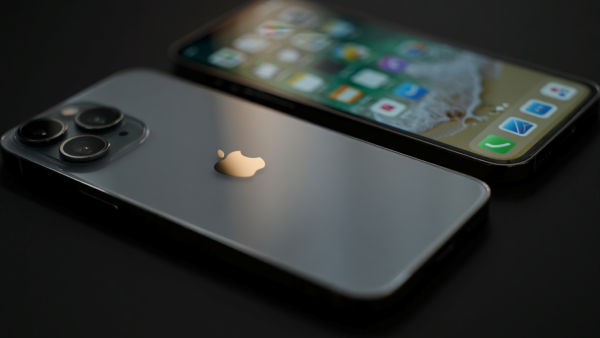
Major Chinese suppliers to Apple posted mixed first-half results. A sharp rise in memory prices is squeezing profitability for smartphone parts makers, while the supply chain is looking to launches of new iPhones and foldable devices as a potential second-half catalyst.
Hong Kong's South China Morning Post reported on Aug. 25 that first-half results diverged sharply between smartphone glass screen maker Lens Technology and Apple partner Luxshare Precision Industry.
Lens Technology, listed in Shenzhen and Hong Kong, posted net profit of 577 million yuan for the six months to June, nearly halving from a year earlier. Revenue fell 12.4 percent to 28.9 billion yuan. Lens Technology said a surge in memory costs across the consumer electronics industry weakened market demand, prompting it to cut production at its Xiangtan plant. It also cited currency fluctuations as a factor weighing on profitability.
Lens Technology is pinning hopes for a second-half turnaround on supplying high-end components for a foldable-device project at a key customer. In a regulatory filing on Aug. 26, the company said shipments of ultra-thin glass, colourless polyimide film and 3D glass covers are expected to drive revenue growth in the second half. It said the products are complex to make and have much higher added value, adding it could be a major beneficiary of a shift from bar-type smartphones to foldable phones.
The market views Apple as the project's key customer. Ming-Chi Kuo, an analyst at TF International Securities known for Apple supply chain analysis, has also identified Lens Technology as a key supplier of ultra-thin glass for Apple's flexible displays. Lens Technology said it expects full-scale mass production of foldable models and new technologies for premium smartphones to make a "significant contribution" to results over the coming years.
The surge in memory prices is weighing on the broader smartphone market beyond individual companies. Counterpoint Research said global smartphone shipments are expected to fall 14 percent this year as rising prices, triggered by expanding demand for AI memory, push up costs. Foldable phones were cited as an exception. Counterpoint Research forecast foldable phone shipments would rise 21 percent, based on expectations Apple will enter the market this autumn.
Luxshare Precision Industry, meanwhile, succeeded in shoring up first-half performance by diversifying its business to reduce reliance on smartphones. First-half revenue rose 40 percent to 174.5 billion yuan and net profit increased 18 percent to 7.8 billion yuan. Growth was driven by automotive electronics and data centre businesses. Consumer electronics accounted for 70 percent of first-half revenue, down from 82 percent a year earlier.
Luxshare forecast 2026 net profit for January to September at 13.25 billion to 14.4 billion yuan. That would be 15 to 25 percent higher than the same period in 2025. The company said AI-based innovation in consumer devices and progress in data centre projects are supporting improved performance.
Even within Apple's supply chain, performance gaps are widening between smartphone-focused companies and those that have broadened their business portfolios. In the second half, with memory price pressures continuing, shipments of components for Apple's new iPhones and foldable devices are expected to be a key factor separating supplier results.
 Jinju Hong (홍진주)
hongjj@d-today.co.kr
Jinju Hong (홍진주)
hongjj@d-today.co.kr