
About 60% of newly filed bank charter applications in the United States include crypto-related business plans.
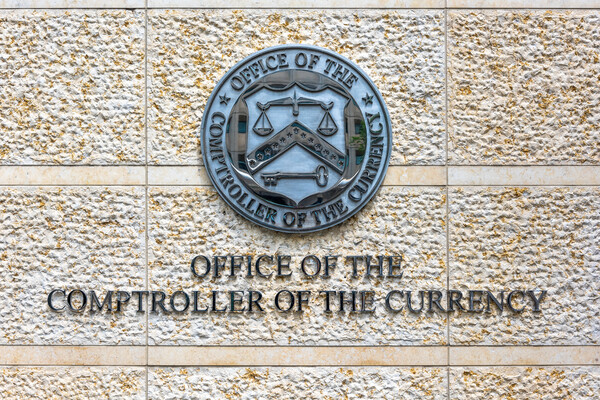
CoinPost, a blockchain news outlet, reported on Wednesday that Office of the Comptroller of the Currency chief Jonathan Gould (조너선 굴드) said 23 of 40 new bank charter applications filed in the 18 months since the Trump administration took office contained digital asset-related proposals. He made the remarks at the Wyoming Blockchain Symposium in Jackson Hole, Wyoming.
That figure is an eightfold increase from the four years of the Biden administration. The OCC is an agency under the U.S. Treasury Department that grants and supervises national bank charters. Gould said it is becoming common for applications awaiting review to include payment stablecoins in their business plans.
As new charter applications rise, the OCC is also speeding up its stablecoin regulatory work. The OCC began drafting rules under the Genius Act even before it was enacted. The Genius Act took effect after U.S. President Donald Trump signed it in July 2025, and it requires stablecoin issuers to back their tokens 100% with highly liquid assets such as U.S. dollars.
It mandated annual audits for issuers with market capitalisation above $50 billion and included standards for handling foreign issuers. Several authorities, including the OCC, were originally required to finalise rules by July but failed to meet the deadline. In February, the OCC also sought public comment on a draft rule clarifying the scope of its supervisory authority, including capital and liquidity requirements.
Gould said he expects the OCC to issue final rules by November and begin accepting applications from next year. Application of the Genius Act is scheduled for January 2027. He said of stablecoins, "We are watching the birth of a new industry." He also said that the OCC's role in managing the quality of assets backing national bank notes since its early years in the 1860s is connected to its current supervision of payment stablecoins.
By contrast, follow-on legislation covering the broader crypto industry remains uncertain. After the Genius Act was enacted, Congress shifted its focus to the Clarity bill, which would regulate the industry more broadly, but adjustments have been delayed over issues including President Trump's conflicts of interest and the handling of stablecoin rewards. Passage within this year was reported to be difficult.
Gould stressed, "It is hard to know when, and in what form, the Clarity bill will be enacted," adding, "What we have now is the Genius Act, and we must implement it." As a result, the incorporation of digital assets into the U.S. regulatory framework is more likely for the time being to centre on stablecoin rulemaking and rising demand for bank charters using it.
 Jinju Hong
hongjj@d-today.co.kr
Jinju Hong
hongjj@d-today.co.kr