
Mobile and PC processor core hybrid design is changing fundamentally. The big.LITTLE structure that used low-power “little cores” is being phased out, and hybrid designs centered on high-performance “big cores” made up only of high-performance cores have emerged as the mainstream.
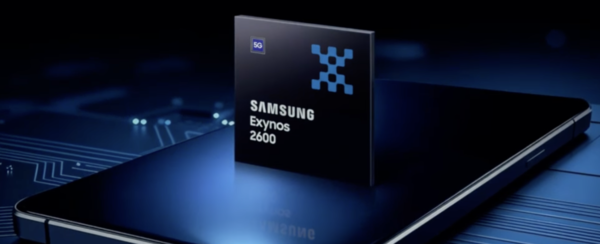
The design has become a mainstream approach in next-generation processors recently unveiled by Samsung Electronics and Qualcomm. Industry sources say Samsung’s Exynos 2600 removes low-power little cores entirely and mixes 10 cores in a “1+3+6” configuration. Qualcomm’s Snapdragon X2 Elite chooses an 18-core setup combining 12 prime cores and 6 performance cores. Both companies opted for designs centered on mid and high-performance cores, excluding ultra-low-performance cores.
Performance has already been validated. Samsung said last month on its website that the Exynos 2600 is in “mass production” status. The industry expects the chip to be used in the Galaxy S26 series, which is seen launching in the first half of next year.
Apple opened this trend. In its M1 chip in 2020, Apple demonstrated overwhelmingly better performance per watt than Intel laptops with a P-core plus E-core structure combining four high-performance (Firestorm) cores and four high-efficiency (Icestorm) cores. That successful formula also influenced the Windows camp.
MediaTek followed, announcing the Dimensity 9300 in November 2023 after removing little cores. The chip, made up of four Cortex-X4 and four Cortex-A720 cores, achieved a 40 percent improvement in multi-core performance from its predecessor. MediaTek CEO Joe Chen said, “An all-big-core design significantly boosted computing power for flagship smartphones.”
Behind the change is the evolution of semiconductor process miniaturisation. The introduction of the 2-nanometre gate-all-around process improved power efficiency for high-performance cores. TSMC has said its N2 process cuts power use by 25 to 30 percent at the same speed compared with N3E. That provides a technical basis to control heat and battery drain even without little cores.
◆Performance cores added to handle medium loads, minimise power waste
Workload changes also drove the design shift. As Android operating system background tasks and on-device AI functions become heavier, bottlenecks occurred with existing little cores. A “race-to-sleep” approach of finishing tasks quickly and cutting power has become more battery-efficient than working longer on slow cores.
To avoid load, Qualcomm chose an 18-core configuration on the Snapdragon X2 Elite combining 12 prime cores and 6 performance cores. At Snapdragon Summit 2025 held last year, Mandar Deshpande, senior director of product management at Qualcomm Compute, said in an interview with South Korean reporters that it introduced performance cores to handle “medium threaded workloads” and distribute workloads. He said the company concluded it was a waste of power in the first generation to use top-performance prime cores even for light web surfing.
The Snapdragon X2 Elite Extreme model uses an 18-core configuration and 12-channel memory to speed up AI agent response times. Deshpande said, “As agentic AI becomes widespread, environments where multiple agents run simultaneously are increasing,” and added, “To shorten time to first token, more computing power is needed.” Qualcomm said devices using the X2 Elite, including the Extreme model, will be released in the first half of 2026.
Samsung also chose the same direction with the Exynos 2600. According to IT outlet PhoneArena, the existing low-power little cores were removed from the Exynos 2600. It is an Arm architecture-based deca-core chip with 10 cores, restructured into a 1+3+6 setup with one big core, three high-performance middle cores and six high-efficiency cores. Samsung said the Exynos 2600 achieved performance gains from its predecessor of 39 percent in CPU computing, 113 percent in NPU performance and 100 percent in GPU performance.
Processor competition is expected to move from “how powerful a core you include” to “how efficiently you handle mid-range workloads.” This makes the 2-nm process more important. An all-big-core structure generates heat if it cannot control leakage current, making a GAA-based 2-nm process a necessary condition to manage heat.
Attention is also focused on changes in the foundry market competition. TSMC’s 2-nm production lines are already secured by companies such as Apple and Qualcomm that have succeeded in changing their cores. In the meantime, Samsung Foundry, which can run a 2-nm process, is emerging as an alternative, and the rise of Chinese foundries has also emerged as a variable. An industry official said, “We have entered the full-fledged 2-nm era,” adding, “If high-performance core-centered designs become the standard, competition to secure advanced processes will become even fiercer.”
 Daegeon Seok
d2dg@d-today.co.kr
Daegeon Seok
d2dg@d-today.co.kr