
Nvidia has again laid out how DLSS 5 will be applied, moving to calm a dispute over damage to game graphics.
On July 22, IT outlet TechRadar, citing a report by Tom's Hardware, said Nvidia newly explained how DLSS 5 is implemented and its developer controls at SIGGRAPH 2026 in Los Angeles.
DLSS 5 is a neural rendering model added on top of existing DLSS upscaling and frame generation. It adds photo-like realistic effects across game scenes. But when it was first unveiled, it drew criticism for harming graphics' inherent texture and art direction. Complaints focused on character faces changing unnaturally and creating a so-called uncanny valley feel.
DLSS 5 drew a fierce backlash when it was first unveiled at GTC 2026, which is also the backdrop to Nvidia offering another explanation within months. Nvidia's SIGGRAPH presentation video is available on YouTube, with DLSS 5 placed in the first part of the video.
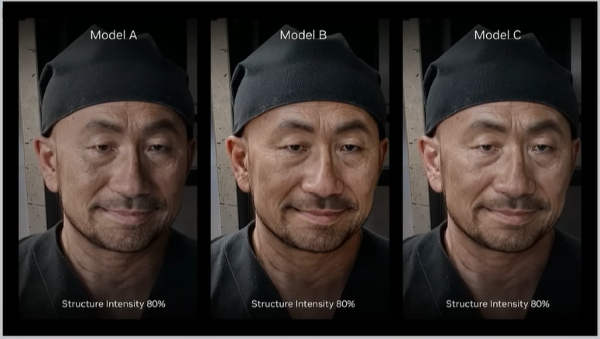
Nvidia, mindful of the reaction, put developer choice at the forefront. The company prepared 3 artificial intelligence (AI) models with differing levels of detail and performance impact, and said developers can mix and apply different models by scene. It is structured to apply different filters by scene rather than applying one setting across an entire game. It also added 2 sliders to adjust 'structure' and 'tone' strength.
It also added an exclusion function, allowing developers to designate game assets to which DLSS 5 will not be applied. In that case, elements such as a character's hair or face can be taken out of range, while only background objects or environmental detail are corrected in a limited way. That amounts to adjusting the design direction so DLSS 5 is used mainly for some areas rather than changing expression across a whole game uniformly.
Reaction has not fully turned. On online communities such as Reddit, some said it is better than at the initial unveiling, but criticism continued that the range of control remains limited. One Reddit user wrote, "I had high expectations early on for DLSS, but now it has become completely a mess." Another wrote that it "confirms what anyone who understands AI even a little can know," criticising it as a "packaged Instagram filter."
The core dispute narrows to two issues. One is whether the adjustment authority given to developers is sufficient. Some say it is difficult to finely control a game's visual results with only 3 AI models and 2 intensity adjustments. Nvidia said it plans to release DLSS 5 this fall, around September to November, and there remains the possibility it could add adjustment functions before the official release.
The other issue is the performance burden. When Nvidia first demonstrated DLSS 5, it used 2 RTX 5090 graphics cards. This time it did not say what hardware it ran on. That fuelled worries that GPU requirements remain high. Nvidia said at SIGGRAPH that DLSS 5 is "VRAM-efficient" but did not provide specific figures. It was confirmed to run on a single graphics card, but actual support scope and the level of performance loss remain undisclosed. The industry has also floated the view that, at launch, it will require an RTX 5080 or higher, effectively an RTX 5090-class graphics card.
There is also talk of possible image-quality anomalies typical of early versions. Existing DLSS 1 also faced criticism for blurriness and various defects early in its release, then stabilised through improvements. There is hope DLSS 5 could follow the same process, but it also carries the burden of proving its completeness from the first version.
The remaining points to watch narrow to whether developer controls are further expanded and how well it can balance graphic quality and performance burden in actual game environments. At this stage, Nvidia has put forward revisions to reduce pushback, but it appears difficult to say it has resolved the issue of gamer acceptance.
 Seung-a Yoo
ysah@d-today.co.kr
Seung-a Yoo
ysah@d-today.co.kr