
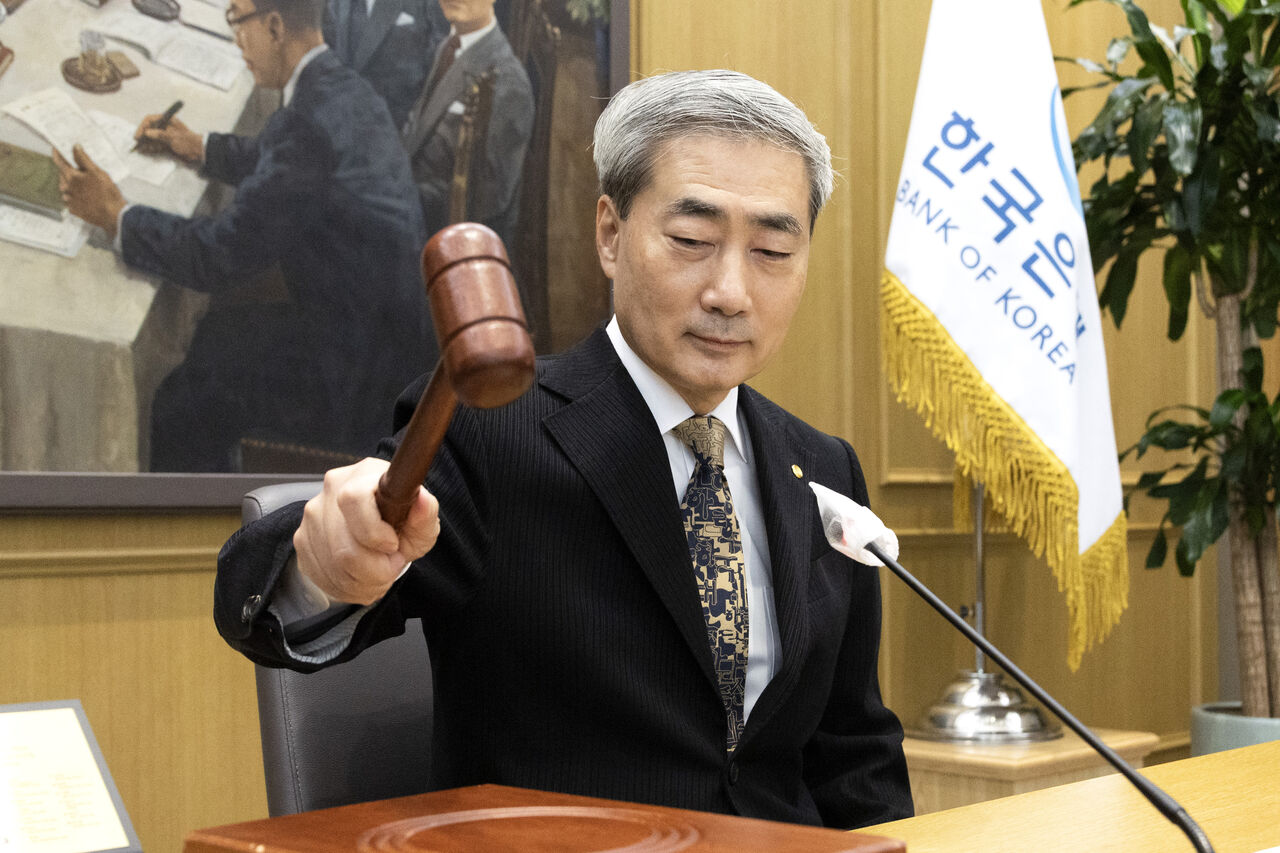
The Bank of Korea held its benchmark interest rate at 3.00 percent. The decision reflects growing uncertainty surrounding the situation in the Middle East and the monetary policies of major countries. The central bank plans to decide whether to raise rates further after reviewing the impact of two earlier rate hikes.
The Bank of Korea's Monetary Policy Board held a meeting on monetary policy direction on Oct. 22 and decided to keep the base rate unchanged at 3.00 percent. All 7 board members voted in favour of the hold.
The board said that while maintaining a tightening stance is necessary given domestic growth and inflation trends, it needs to confirm the spillover effects of previous rate hikes as domestic and external uncertainties have widened.
The board said the domestic economy is continuing a solid growth trend, supported by rising exports and investment driven by a strong semiconductor cycle. The Bank of Korea expects economic growth this year and next to significantly exceed its August projections of 3.3 percent and 2.9 percent, respectively. It also sees the recovery in consumption broadening as income conditions improve.
Inflationary pressure remains. Consumer inflation in September rose 2.9 percent, while core inflation excluding food and energy came in at 2.8 percent. The Bank of Korea expects inflation this year to broadly match its previous forecast, but to exceed its earlier estimate next year.
In terms of financial stability, the housing market in the Seoul metropolitan area and household debt were cited as key risk factors. Household lending growth slowed due to a decline in other loans, but housing-related loans increased and upward pressure on home prices in the Seoul metropolitan area persists.
The Bank of Korea plans to decide the timing and pace of additional rate hikes by comprehensively considering the outlook for the economy and inflation, as well as financial market conditions. External variables, including developments in the Middle East, international oil prices and moves in the exchange rate, are also key items to monitor.
 Ji-young Lee
ljy@d-today.co.kr