
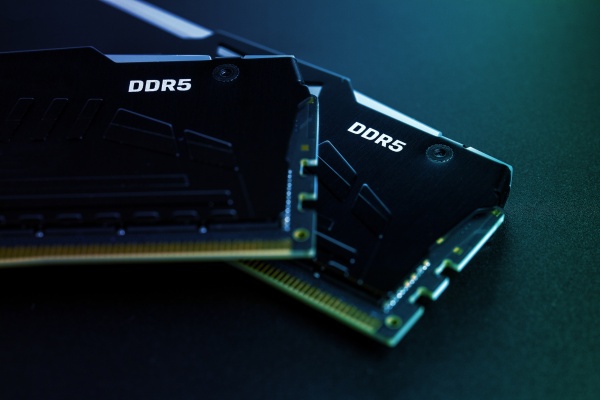
[DigitalToday reporter Jinju Hong] DDR5 memory prices in Germany's retail market have jumped again, hitting a record high.
TechRadar, an IT media outlet, reported on Tuesday that DDR5 prices in Germany rose to 448 percent compared with levels before memory prices surged, marking the highest level this year.
DDR5 prices stood at 440 percent at the start of this year, based on data compiled by German market research firm 3DCenter, before falling to 408 percent in March. They held at the same level in April, but rebounded to 419 percent in June and surged to 448 percent in July. The figure is a record high for the German market.
The rise in memory prices cannot be pinned down as a Germany-only phenomenon. Even so, it tracks market forecasts that further increases will continue in the second half and that conditions could worsen next year. The outlet said the moves in the German market support those expectations.
The possibility of higher semiconductor production costs was also cited as a burden factor. Observers have raised the prospect that TSMC could raise chip production costs by up to 10 percent next year. Higher materials costs, rising semiconductor equipment costs and the funding burden of expanding new production facilities were cited as factors.
In particular, the increase could be larger when ordering additional high-performance computing (HPC) chips beyond existing orders. Reports said such orders could face an additional increase of up to 15 percent.
The timing has not been confirmed. There has been talk that related increases could apply from 2027. The outlet also noted that this was not an official announcement and was based on sources. Even so, an assessment was also presented that additional chip price increases look plausible and perhaps inevitable.
In that case, the impact would not stop at memory prices. Manufacturers supplied with semiconductors from TSMC are likely to pass higher costs on to consumer prices. That is why concerns are emerging that prices could rise further next year not only for processors but for devices across the board that include CPUs. TSMC counts Apple, Nvidia, AMD and Qualcomm among its major semiconductor customers.
The market is also seeing a growing view that instability in memory supply and demand will be difficult to resolve in the short term. That sentiment aligns with a comment by Nvidia Chief Executive Jensen Huang (젠슨 황) that the RAM crisis could continue until around 2030. That has also raised the prospect of demand emerging to bring forward purchases of hardware such as PCs and laptops.
Ultimately, there are two key variables in the market now. One is how far the sharp rise in memory prices spreads beyond Germany, and the other is whether TSMC's production cost increase is actually confirmed. If the two trends combine, there could be additional pressure next year on overall prices of PC parts and finished products.
 Jinju Hong
hongjj@d-today.co.kr
Jinju Hong
hongjj@d-today.co.kr