
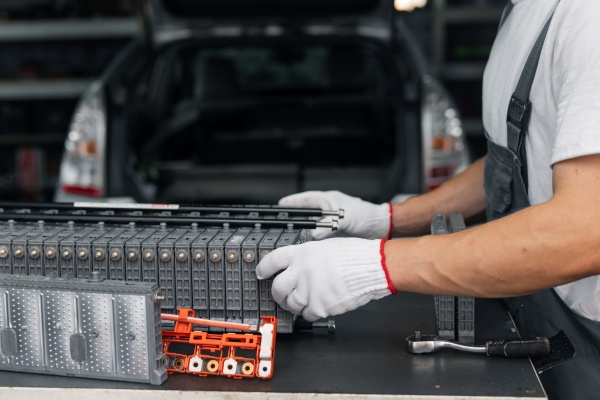
Colorado will impose responsibility for collecting and processing waste electric vehicle batteries on automakers. The aim is to institutionalise a recycling system by having manufacturers directly manage batteries that will increase with wider EV adoption, rather than consumers or local governments.
On July 22 local time, IT outlet Engadget reported that Colorado, through the SB26-003 bill signed in June, required automakers to directly retrieve and process EV batteries that have reached the end of their life or are no longer used by owners.
A key point of the law is that it clearly assigns responsibility for managing waste batteries to manufacturers. Previously, the burden could be spread among vehicle owners, repair shops and local waste disposal facilities, but automakers will now have to manage everything from collection through reuse, recycling and disposal.
Colorado will also gradually block landfilling of waste EV batteries. From July 2029, landfills in the state cannot accept EV batteries as waste. The measure is intended to encourage separate collection and reprocessing routes instead of simple burial.
EV batteries require a lot of energy and critical minerals during production, and their size and weight make transportation and storage burdensome even after their service life ends. Fire risks also make them difficult to handle in the same way as general waste.
However, waste batteries contain resources that can be recycled, including lithium, nickel and cobalt. If manufacturers establish stable collection systems, batteries can be reused as energy storage devices or core materials can be extracted and used to produce new batteries.
The law reflects awareness that the growth of the EV industry and a waste-battery management system must be built together. EVs have lower emissions and maintenance cost burdens during operation than internal combustion engine cars, but environmental problems arising in battery production and disposal have been cited as tasks that need to be resolved.
Colorado's system has a structure similar to an extended producer responsibility recycling system, or ERP, in which producers remain responsible after a product's use ends. By requiring companies that supply batteries to the market to bear disposal-stage costs and management responsibility, it can promote product design that considers recycling and investment in processing infrastructure.
Manufacturers must establish collection hubs, transportation networks and cooperative systems with reuse and recycling companies before the 2029 landfill ban takes effect. As EV sales rise and the number of batteries subject to collection increases, related cost burdens are expected to grow.
In the industry, there is speculation that Colorado's move could influence other states' waste-battery policies. There is also an assessment that EV rollout policy is expanding beyond support for vehicle sales toward managing the entire life cycle, from battery production to disposal.
 Jinju Hong (홍진주)
hongjj@d-today.co.kr
Jinju Hong (홍진주)
hongjj@d-today.co.kr