
Card spending requirements to receive preferential interest rates on bank loans will be significantly eased. Items excluded from card spending records, which differed by bank, will be reduced to about 1 item. Debit cards will be recognised under the same criteria as credit cards. Instalment payments will also be reflected in spending records each month over the instalment period.
The Financial Supervisory Service said on Tuesday it will work with the banking sector to improve how card spending is calculated and what is excluded among conditions for loan rate reductions. It plans to implement the changes for new loan customers from September to October, after banks develop IT systems and revise agreements.
Banks currently reduce household loan rates when customers meet conditions such as salary transfers, savings subscriptions and card spending above a certain amount. But complaints continued because banks differed on the spending calculation period, whether early payments are recognised, how family cards are combined and what items are excluded.
Some customers did not receive the agreed rate reduction because they paid card bills early or used family cards. There were also cases where customers were not properly informed which month's spending would be reduced when a card payment was cancelled, or where preferential rates were not applied because card companies and banks used different calculation periods.
The FSS and banks decided to provide detailed guidance on how card spending is calculated and what is excluded in loan agreements, on websites and in mobile applications. They are also pursuing a plan to notify long-term borrowers with loan terms of 5 years or more about rate reduction conditions at least once a year via mobile messages or email.
◆How card instalment spending is recognised will also change
Items excluded from card spending records will also be sharply reduced. Banks currently exclude typically 4 to 8 items from spending records, including cash advances, card loans, revolving credit, annual fees, various charges, government support payments and postpaid transit card amounts.
After the improvements, each bank will minimise excluded items to about 0 to 1, such as card loans or postpaid transit cards. Banks will not distinguish between credit and debit cards and will recognise both as spending records, applying the same level of rate reduction based on card spending amounts.
How card instalment amounts are recognised will also change. Some banks currently reflect the full instalment payment amount only in the month of purchase, but they will instead recognise it by dividing it into monthly spending records according to the number of instalment months.
For example, if a customer must use a card for at least 600,000 won each month to receive a rate reduction and pays 3,600,000 won in six-month instalments, the customer will be able to receive credit for 600,000 won per month over six months.
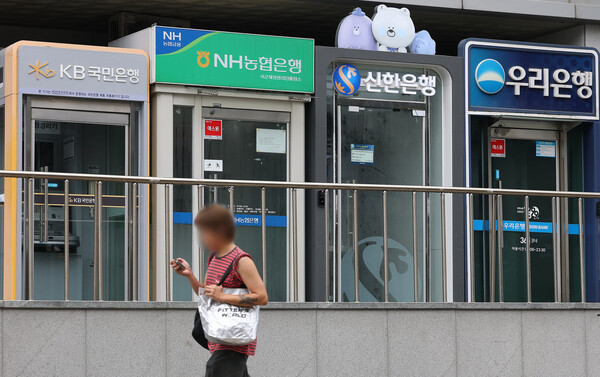
Hana Bank has been implementing the improvements since June 30. Woori Bank, IBK Industrial Bank of Korea, Busan Bank and Jeonbuk Bank will apply them from Sept. 30.
NH Nonghyup Bank and iM Bank and Suhyup Bank plan to apply them from Oct. 1, and KB Kookmin Bank from Oct. 6. Shinhan Bank plans to implement them on Oct. 30. For existing loan customers, banks will apply the changes sequentially after October, considering differences in calculation systems among banks.
The FSS said it expects the system to help improve transparency in loan rate reduction frameworks and protect consumers' rights. It also expects it to help establish sound business practices and prevent potential disputes in advance.
 Ji-young Lee
ljy@d-today.co.kr
Ji-young Lee
ljy@d-today.co.kr