
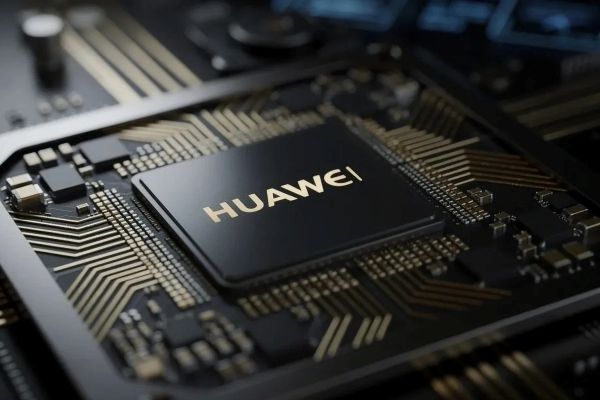
[Digital Today reporter Jinju Hong (홍진주)] Speculation has resurfaced that Huawei is building and operating DRAM production facilities directly in mainland China. If confirmed as true, Huawei would move a step closer to vertically integrating semiconductors spanning central processing units (CPUs), solid-state drives (SSDs) and DRAM.
Tech outlet TechRadar reported on Monday that Huawei is suspected of effectively controlling a DRAM factory through a joint structure with Shenzhen memory company Qubulas. The claims also include that Huawei exerts influence over at least 11 semiconductor plants in the Shenzhen area. Huawei has officially denied the allegations.
The suspicion is not new. A theory linking Huawei and Qubulas also surfaced last year. Based on satellite images made public at the time and circumstances related to production facilities, an analysis said Huawei's advanced semiconductor production line was connected to Qubulas, and a claim was also raised that Chinese government funds were injected into the facility.
An analysis says active support from the Chinese government is in the background. After U.S. export restrictions made it difficult to secure cutting-edge semiconductors, China has focused on fostering Huawei as a core semiconductor company. The Semiconductor Industry Association estimated that Huawei is receiving about $30 billion in support from the central government and the city of Shenzhen to build a semiconductor production network. Another analysis also raised a claim that cumulative state support injected into Huawei since 2019 totals $75 billion.
China's industrial policy is also working in Huawei's favor. The Chinese government is effectively restricting major domestic tech companies from buying AI chips from AMD and Nvidia, while fostering Huawei's Ascend AI accelerators as a key platform in the Chinese market. As a result, Huawei is assessed as being able to secure stable demand based on policy support.
U.S. export control measures are also cited as a factor lending weight to suspicions about Huawei's production network. The outlet reported that the United States is known to have included related companies in its export control targets after judging them as a single network. This has raised the possibility that China may be operating a production network that appears independent on paper but is actually connected to Huawei.
Huawei also has sufficient incentive to pursue a DRAM production base. Demand for high-bandwidth memory (HBM) is surging alongside the expansion of the AI market, but U.S. restrictions have limited access to the global supply chain. The industry sees securing in-house DRAM production capabilities as a key strategy that could go beyond expanding its memory business to strengthening competitiveness in AI chips.
Huawei currently competes with Apple in smartphones, Intel in server CPUs and Nvidia in the AI chip market. But on the production side it still relies on Chinese foundry SMIC, and its manufacturing process competitiveness is assessed as lagging about two to three generations behind TSMC.
In memory, a technology gap with Samsung Electronics remains. Samsung Electronics is known to be 3 to 4 years ahead of China's CXMT in HBM technology. Still, Chinese companies are rapidly improving their technology in commodity DRAM, and an assessment has also emerged that they have secured considerable competitiveness in NAND flash used in SSDs.
The industry sees that if the DRAM production theory is confirmed as true, Huawei could emerge as a rare semiconductor company spanning chip design and production and memory supply. Samsung Electronics is widely cited as the company that has built the broadest such business structure.
 Jinju Hong
hongjj@d-today.co.kr
Jinju Hong
hongjj@d-today.co.kr