
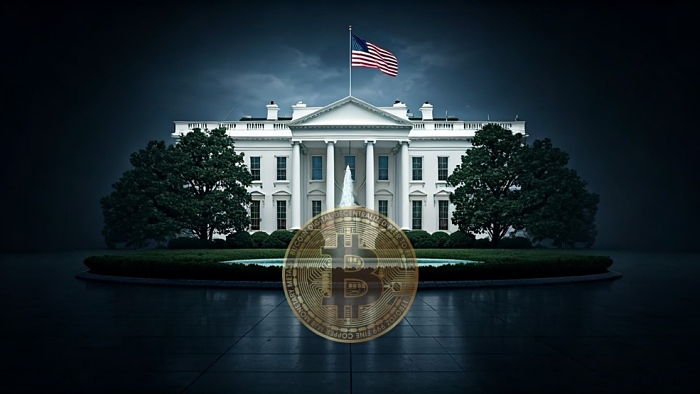
A U.S. plan for a strategic bitcoin reserve has failed to take shape for 16 months.
Foreign media including blockchain outlet Bitcoin Magazine and Bloomberg reported on Monday that the work is being delayed as the Treasury and Commerce departments compete for leadership over operating the reserve. Questions have also been raised over the Treasury Department's legal authority to manage it.
U.S. President Donald Trump (도널드 트럼프) in March 2025 ordered the creation of a "strategic bitcoin reserve" and a separate "U.S. digital asset stockpile" through an executive order. The order called for acquiring bitcoin in a budget-neutral way, not through taxes, and outlined using bitcoin the government already holds through criminal and civil forfeiture procedures as a main source of funding.
But two issues surfaced in the design stage. The Treasury and Commerce departments each argue they should be in charge of the reserve, and it is unclear whether the Treasury has legal authority to directly manage the assets. A proposal to place the reserve under the Commerce Department is also said to be under consideration.
The Justice Department said its Office of Legal Counsel is consulting with both Treasury and Commerce to examine legally possible options for implementing the president's policy. Another issue has emerged over whether the government can, in effect, hold bitcoin indefinitely in line with the executive order's intent. The remaining task is how the government would institutionalise a structure for long-term holding of an asset with high price volatility.
The White House says it has yet to decide on a final structure. White House spokeswoman Liz Huston (리즈 휴스턴) said Trump has pledged to make the United States a global hub for cryptocurrencies and advanced technology, and the administration continues to evaluate the best structure for the strategic bitcoin reserve and the U.S. digital asset stockpile to realise that vision.
The administration had signalled it would make a swift announcement as recently as this spring. White House senior crypto adviser Patrick Witt (패트릭 위트) said around April that he expected a major announcement within weeks, but no follow-up has yet been made.
Administration officials also see the executive order alone as insufficient to move the project forward. They say an executive order does not carry the same force as law, and Congress has yet to pass a bill approving the establishment of the reserve.
Progress on legislation has also been limited. Senator Cynthia Lummis and Representative Nick Begich introduced a bill to codify the executive order and acquire 1 million bitcoin over five years in a budget-neutral way, but no substantive steps have been taken so far. If Republicans lose their House majority in this year's midterm election, the chances of passage could fall further.
In market and funding terms, the U.S. government's bitcoin holdings are already seen as among the world's largest. Arkham Intelligence estimates they exceed 300,000 bitcoin, worth more than $20 billion at current prices. The White House has argued the government sold previously seized bitcoin too early, causing taxpayers losses of about $17 billion. The administration's logic is that long-term holding under a single reserve system would give the country strategic advantages.
Price moves are complicating the reserve debate. Bitcoin has fallen nearly 50 percent from its all-time high in October last year. When Trump first mentioned the reserve plan, bitcoin was around $93,000, and it is now above $64,000, down by about a third. The reserve's premise of long-term holding also sets it apart from existing national stockpiling systems.
In this situation, Trump recently referred to the newly introduced "Trump account" and, asked whether bitcoin could be included in it, said, "Anything could happen." He also said, "I am a big fan of cryptocurrencies."
Separately, recent financial disclosure documents show Trump personally holds bitcoin positions of more than $50 million. The U.S. strategic bitcoin reserve appears to need to clear three hurdles — institutional design, interagency authority and congressional legislation — before it can move to an actual launch.
 Yoonseo Lee
yslee@d-today.co.kr
Yoonseo Lee
yslee@d-today.co.kr