
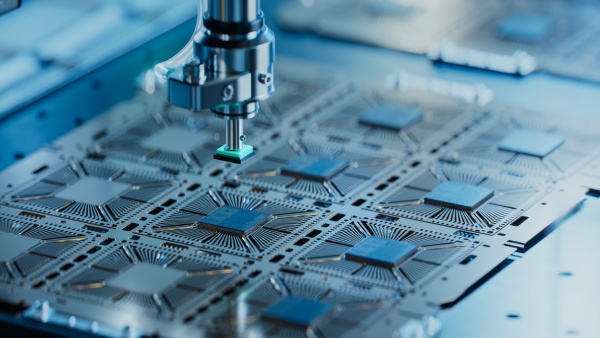
With demand for memory chips surging as AI data centres spread, global memory makers including Samsung Electronics, SK hynix and Micron have formally asked the U.S. government to refrain from intervening in supply for specific industries.
According to online outlet Gigazine on Sunday, SEMI, an international association whose members include Samsung Electronics, SK hynix and Micron, sent a letter on July 1 to U.S. Treasury Secretary Scott Bessent conveying its opposition to policies that could distort the memory market.
The industry’s biggest concern is a government approach that pressures suppliers to prioritise memory allocation to specific sectors such as the auto industry during shortages. SEMI said in the letter it supports tax incentives to expand semiconductor production in the United States. But it said government efforts to directly adjust prices, production capacity or sources of supply could instead prolong memory shortages. The association stressed that supply intervention targeted at specific industries risks reducing market resilience and extending shortages.
The request comes alongside expanding investment in AI infrastructure. As generative AI services and data centre construction grow rapidly, demand for memory including high-bandwidth memory, or HBM, has surged. As a result, prices for consumer memory as well as enterprise memory are facing upward pressure. An analysis said the impact is also being reflected in prices for consumer products such as smartphones, laptops and game consoles.
In U.S. politics, demands have also been raised that memory should be supplied first to the auto industry. Republican Senator Bernie Moreno (버니 모레노) sent a letter in April to the U.S. Commerce Department arguing that Samsung Electronics, SK hynix and Micron should cooperate to prioritise memory supplies to the U.S. auto industry. The letter also included the view that the auto supply chain should be protected even by limiting overseas sales.
The semiconductor industry, in contrast, stressed that consumer support is a more effective alternative than such supply redistribution. SEMI proposed to the U.S. government and Congress that they consider tax credits for consumers to reduce the burden from rising smartphone and laptop prices. It said lowering consumer costs, rather than forcibly reshuffling supply, could minimise market distortions.
The letter also included an industry assessment that supply-demand instability will be difficult to resolve in the short term. The association said memory output is increasing by about 19 percent a year, but demand growth driven by the expansion of AI infrastructure is outpacing that. It forecast that memory supply constraints are likely to persist across most industries, including laptops, cars and home appliances.
As a result, debate over U.S. semiconductor policy appears to be shifting beyond simply expanding supply to how the market should be intervened in. The industry supports tax incentives to expand production, while drawing a line against prioritised allocation for specific industries or measures that influence price and production decisions. With the possibility raised of a prolonged memory shortage, the article said attention will focus on what approach the U.S. government chooses between sector-by-sector supply intervention and consumer support.
 Jinju Hong
hongjj@d-today.co.kr
Jinju Hong
hongjj@d-today.co.kr