
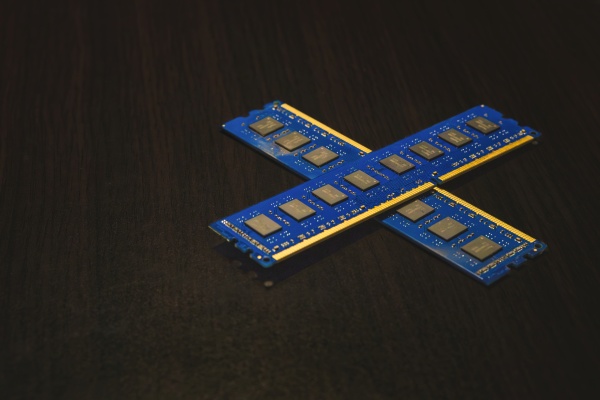
MSI has unveiled a beta BIOS that supports ultra-high-speed operation of DDR5 memory equipped with chips from China’s largest DRAM maker ChangXin Memory Technologies (CXMT). With a case confirmed in which China-made DDR5 memory stably achieved speeds of DDR5-8000 or higher on major motherboards, attention is turning to the possibility of a new supply option emerging in the PC memory market dominated by Samsung Electronics, SK Hynix and Micron.
An online outlet, Gigazine, reported on Tuesday that MSI validated high-speed operation of CXMT-based DDR5 memory via a beta BIOS for AMD motherboards. The BIOS, first distributed in China, showed DDR5-8200 operation in a dual-DIMM setup and DDR5-7200 in a quad-DIMM setup. A global version of the BIOS has not yet been released.
The significance of the announcement goes beyond a simple BIOS update. So far, the PC DDR5 memory market has been effectively led by three companies: Samsung Electronics, SK Hynix and Micron. In particular, after Micron announced late last year that it would exit its consumer memory and storage business, DDR5 prices have remained high, and calls have persisted for the need for a new source of supply.
CXMT is a Chinese memory company founded in 2016 and has been pursuing development of DDR5 memory rated up to 8,000 Mbps. But there have not been many cases in which actual consumer products operated stably in global motherboard environments. The MSI validation is seen as meaningful in that China-made DDR5 is beginning to gain recognition for compatibility and performance in the PC market.
The released materials also included results from the hardware information program HWiNFO and the memory stability test program MemTest. A 24GB DDR5 module from KingBank listed the manufacturer as "CXSH" and was shown to have passed testing without errors in a DDR5-8200 environment.
A case of Lexar DDR5 memory based on CXMT chips operating at DDR5-8000 was also disclosed. It also confirmed that not only products from a specific maker but multiple brands are using CXMT chips.
Price competitiveness has not been secured immediately. According to the report, prices of CXMT-based DDR5 products are known to be not particularly cheaper than products from Samsung Electronics, SK Hynix and Micron. An analysis says that, in the short term, the significance is greater in expanding supply volume and diversifying supply chains than in price competition.
Geopolitical variables also remain. CXMT is included on the U.S. Defense Department’s list of Chinese military companies and is among the targets of U.S. semiconductor restrictions on China. On the other hand, reports have also said Apple recently asked the U.S. government for permission to purchase CXMT products to diversify its memory suppliers, raising the possibility of a reshaping of global supply chains.
The industry is watching whether MSI’s beta BIOS support will expand beyond the China market to global products. If CXMT proves not only price competitiveness but also stable supply capacity and compatibility, it could become a new option in the consumer DDR5 market beyond Samsung Electronics, SK Hynix and Micron, according to an assessment.
 Jinju Hong
hongjj@d-today.co.kr
Jinju Hong
hongjj@d-today.co.kr