
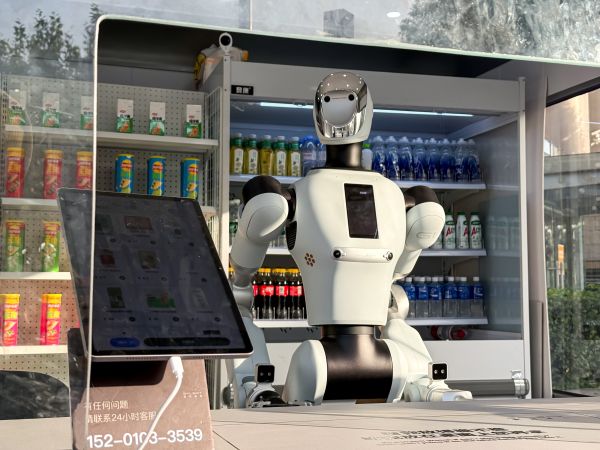
[DigitalToday reporter Jinju Hong (홍진주)] Humanoid robots are in the spotlight as a core part of next-generation industry, but an analysis says the market needs staged deployments in the field rather than rushed commercialisation.
On July 6, local time, IT outlet TechRadar said the humanoid industry could grow in the long term into a market comparable to automotive and computing, but it has not yet reached full-scale mass adoption in terms of technology, costs and regulation.
The outlet said the key to commercialisation is not “speed” but “how”. It proposed a “Crawl, Walk, Run” approach as a development strategy for humanoids. The idea is to build up capabilities step by step and raise maturity, rather than putting them into the field without sufficient verification.
It stressed that “unprepared technology should not be rushed into the field,” and that “real competitiveness is created by steadily building capabilities.” It said this approach is needed because the gap remains large between demonstration videos and real working environments.
The biggest technical challenges for humanoids were cited as maintaining balance and walking ability. Advances in reinforcement learning and actuator technology have made it possible to walk and run, and even do parkour, in controlled environments, but real factories and logistics sites mix uneven floors, obstacles and slippery surfaces, making stable movement difficult.
Precise control of the hands is also a key factor that will determine commercialisation. Human hands use 27 degrees of freedom to perform fine force control and tactile responses, but current humanoid hands still lack delicate manipulation. Tasks that are natural for people remain very difficult for robots, such as threading a needle, picking up an egg without breaking it, or catching a ball flying toward them.
Even so, the outlet said that as physical AI technology advances, tasks such as picking up and moving objects on actual hardware beyond the lab level are being implemented more stably.
Cognitive ability is also a challenge that must be solved. Humanoids need to distinguish people from obstacles and judge hazards in real time in changing environments. The analysis said current AI shows high performance in individual functions, but has not yet reached the stage of integrating them into a single stable system.
Economic feasibility is also a factor blocking commercialisation. Some companies are touting low-cost humanoids, but TechRadar pointed out that current products can be closer to “expensive toys” than actual workers. At the other end, high-end industrial models cost hundreds of thousands of dollars, making them expensive to use to replace work people can do.
The industry expects prices to fall with mass production, but a view has emerged that it remains uncertain when humanoids in the $20,000 to $30,000 range will appear with both productivity and cost competitiveness secured.
A robot-as-a-service (RaaS) model is also mentioned as an alternative. It has the advantage of reducing upfront introduction costs, but it does not solve operating and maintenance costs in the long run, it said.
Regulation and social acceptance are also hurdles. It said systems and safety standards to verify whether humanoids can work safely for long periods without human intervention are still not sufficiently in place. Social resistance to the spread of automation was also cited as a variable that could affect market expansion.
Even so, the industry sees the direction of humanoid commercialisation itself as unlikely to change. TechRadar forecast that even in simple repetitive work such as box packing, the pace of technological development will accelerate further as real-world data accumulates.
Ultimately, an analysis said the outcome in the humanoid market will be decided not by flashy demonstration videos but by how stably repetitive tasks can be performed in real work environments and how much costs can be lowered. Another assessment said companies that build experience in early industrial sites are likely to secure technical standards and market leadership.
 Jinju Hong
hongjj@d-today.co.kr
Jinju Hong
hongjj@d-today.co.kr