
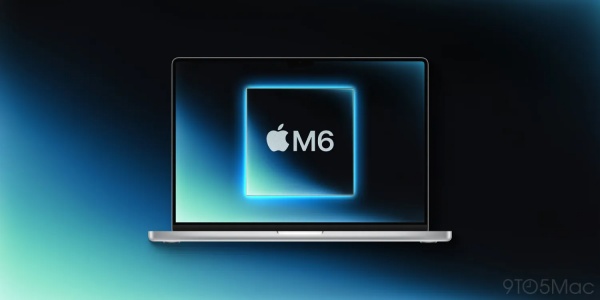
Apple may apply the M6 chip, expected to debut this autumn, to only some products and then move straight to the M7 generation.
NineToFiveMac reported on Sunday that Apple is considering releasing only the base M6 while moving pro-grade products to M7.
The key point is that the M6 generation could be narrower than expected. According to what is being discussed, Apple is not preparing M6 Pro and M6 Max. Instead, it is putting more weight on moving up the M7 schedule. Observers say M7 is being designed around a "major advance in on-device AI processing."
In that case, a new base-model MacBook Pro is being cited as the first product to get M6. The model is likely to keep the current exterior design while changing only the chip. It is not yet confirmed whether products using M6 will effectively be limited to this single model, but there is little expectation of a broader rollout.
Candidates being discussed inside and outside Apple are products expected from early 2027 onward. A new iPad Pro expected for a spring release could become the first product to carry M7, but a more likely scenario being discussed is adoption of M6. A new MacBook Air that could appear around the same time is also being cited as a candidate for an M6 update. Beyond those two products and the base-model MacBook Pro, some expect the M6 generation could completely skip other Mac lineups.
That would raise the likelihood that the Mac mini, iMac, Mac Studio and high-end MacBook Pro move to the next generation without going through M6. If M6 Pro and M6 Max are omitted from the high-performance lineup in particular, Apple’s chip rollout approach would also see a significant change. Until now, Apple silicon has had a relatively clear expansion path from the base chip to Pro, Max and Ultra, but this time there is talk of running the generation itself for a shorter period.
The backdrop is competition in AI processing. Apple still has M5-based products expected to be unveiled within a few months, but it is also preparing M6 and later generations at the same time. In that process, forecasts have emerged that M7 could be released as early as the first half of next year. The strategy is seen as moving quickly to a next chip focused on stronger AI performance rather than extending the M6 generation.
That could also change how consumers choose products. For those considering buying a new Mac or iPad now, the situation calls for looking beyond a simple generational update to which products actually get M6 and whether some lineups move straight to M7. Points to watch include whether the iPad Pro and MacBook Air adopt M6 in addition to the base-model MacBook Pro, and whether desktop products such as the Mac mini and iMac end up waiting until M7.
 Jinju Hong
hongjj@d-today.co.kr
Jinju Hong
hongjj@d-today.co.kr