
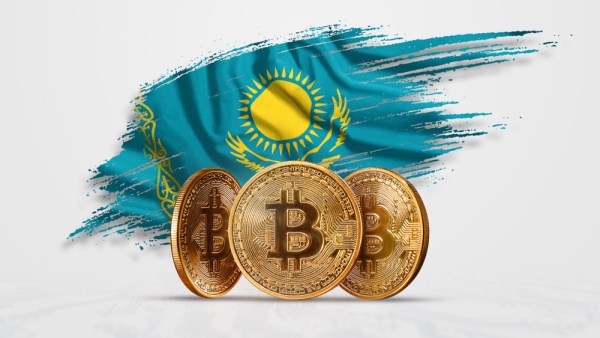
Kazakhstan's central bank (NBK) has issued the first operating licence for a cryptocurrency exchange under a revised digital asset legal framework.
On July 2 (local time), blockchain media outlet Cryptopolitan and other foreign media including Kursiv reported that the first recipient was local company Pax Finance.
With the approval, Pax Finance can buy, sell and custody cryptocurrencies in a regulated national market, beyond the previous framework that was limited to Astana's special financial zone. It can also exchange digital assets and fiat currency, open branches and install Bitcoin ATMs.
In a notice released on July 1, the NBK said a licensing system for industry participants was introduced on May 1. It then reaffirmed in a Telegram post on July 2 that crypto firms must also register with the central bank to operate legally.
The licence issuance aligns with Kazakhstan's push to bring crypto distribution into the formal system. Kazakhstan was once seen as a promising crypto mining hub after China's mining ban. It later allowed trading so miners could legally exchange coins, but limited eligible platforms to those operated by residents of the Astana International Financial Centre (AIFC).
Cryptocurrencies were formally recognised under the Law on Digital Assets that took effect in 2023, but actual trading was limited. As a result, digital asset trading mostly flowed into peer-to-peer transactions, unregistered exchanges or overseas-based platforms. Kazakhstan's authorities this year began steps to reduce such opaque trading and turn the country into a regional crypto hub.
In early May, the digital asset law was revised, and later that month the central bank adopted subordinate regulations to legalise fund flows related to cryptocurrencies. The revised legal framework focuses on allowing coin trading beyond the AIFC's limited system and comprehensively regulating overall crypto distribution. The exchange licence is the first case of a platform being incorporated into this expanded regulated market.
Institutionalisation is proceeding alongside tougher enforcement. Investigative authorities have continued crackdowns on illegal trading activity, and disclosures said about 130 such venues were closed locally. These operators were tallied as having processed a total of $127 million in digital asset transactions as of early 2026. Authorities said they also seized more than $5 million in various assets during the dismantling process.
The government is also wary of potential capital outflows through cross-border crypto transfers. Kassym-Jomart Tokayev (카심-조마르트 토카예프), Kazakhstan's president, has urged authorities to end fund outflows. In this situation, Kazakhstan is also pushing to legalise domestic crypto payments.
In direct payments, only the tenge will retain legal tender status, but the system is being prepared so crypto holders can buy goods and services using crypto cards that immediately convert to fiat currency. Issuing the first exchange licence is seen as a step that reflects Kazakhstan's policy shift to bring trading and fund flows into a controlled framework while also broadening the scope for payment use.
 Yoonseo Lee
yslee@d-today.co.kr
Yoonseo Lee
yslee@d-today.co.kr