
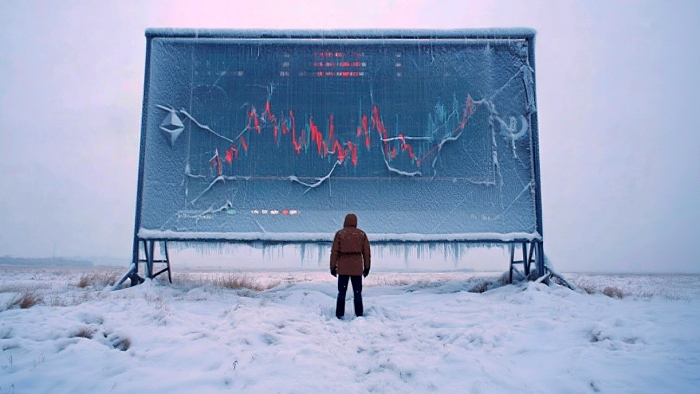
As bitcoin trades sideways around $60,000, Fidelity diagnosed the current downturn as a typical crypto winter and presented five factors that could drive an end to the bear market.
According to blockchain outlet Bitcoin Magazine on June 29 (all times local), bitcoin is about 53 percent below its all-time high of around $126,200 set in October 2025.
In the report, Fidelity cited bitcoin's four-year cycle as the first variable. Since 2011, bitcoin has generally formed bull market peaks and bear market bottoms at roughly four-year intervals. With the previous bear market low formed in November 2022, it said the next bottom could be around November 2026 if the pattern holds. Fidelity added that cycle lengths have not been the same each time and that the pattern should be used to gauge broad trends rather than precise trading timing.
Fidelity pointed to the halving as the background to this cyclical structure. It described the halving as a key mechanism that reduces bitcoin supply and said that after the most recent halving in April 2024, the block reward fell to 3.125 BTC. It said that if demand holds up or increases while new supply declines, there could be more room for prices to rise.
The second variable is regulation. Fidelity analysed that relatively clear regulatory signals preceded each past bitcoin bull market. It said the U.S. Securities and Exchange Commission's approval of a bitcoin spot exchange-traded product in January 2024 acted as a key catalyst that drove bitcoin prices higher. Fidelity cited the "Clarity bill" as the next major legislative variable.
The Clarity bill would split oversight authority for digital assets between the SEC and the Commodity Futures Trading Commission and provide the industry with a clearer legal framework. The bill passed the House in 2025 and then went through the Senate Banking Committee, with a hearing scheduled for July 17. Fidelity said that if the bill is ultimately enacted, U.S. investment demand that has been blocked by legal uncertainty could revive.
The third factor is Federal Reserve policy. Fidelity assessed that there has been a consistent correlation between rate cuts and rising crypto prices. It said that when monetary conditions ease, borrowing costs fall and investors' risk appetite returns, benefiting the crypto market. It added that inflation concerns remain in mid-2026, leaving the Fed's path uncertain. Fidelity also said price gains can appear even before official rate-cut announcements and that markets tend to price in changes in advance.
The fourth variable is new use cases. Fidelity analysed that in the bull market from 2019 to 2021, non-fungible tokens and meme coins sharply lifted investment demand. It pointed to real-world asset tokenisation, AI-related crypto infrastructure and stablecoins as areas likely to draw market attention in 2026.
It assessed that stablecoins, in particular, have seen adoption accelerate since passage of the "Genius bill" in 2025. Fidelity added that catalysts that change market direction have always emerged unexpectedly, leaving open the possibility that a new narrative could form in areas investors are not yet focusing on.
The final factor is institutional adoption. Fidelity said a new investment narrative formed when listed companies first disclosed crypto holdings in 2020, helping fuel record highs at the time. It assessed that the United States' strategic bitcoin stockpile proposal in March 2025 was a similar trigger that pushed bitcoin above $126,000. Fidelity said that even though institutional demand continued throughout 2026, it has not yet led to a new bull market.
Fidelity said unexpected large-scale demand could again change the market's calculations. For example, if one of the "Magnificent Seven" companies announces a large bitcoin holding, it could create a new narrative similar to what formed after Tesla's purchase announcement in 2021. It also mentioned a scenario in which a global crisis prompts institutions to move into bitcoin as a hedge, but added that such a shift has not yet materialised even as the Iran conflict continues.
Market attention is now focused on which of these five variables will take shape first. Whether the four-year cycle thesis holds, whether changes in U.S. legislation and monetary policy revive demand, or whether new use cases and large institutional buying create another bull-market narrative are expected to be key points to watch in the second half of the year.
 Yoonseo Lee
yslee@d-today.co.kr
Yoonseo Lee
yslee@d-today.co.kr