
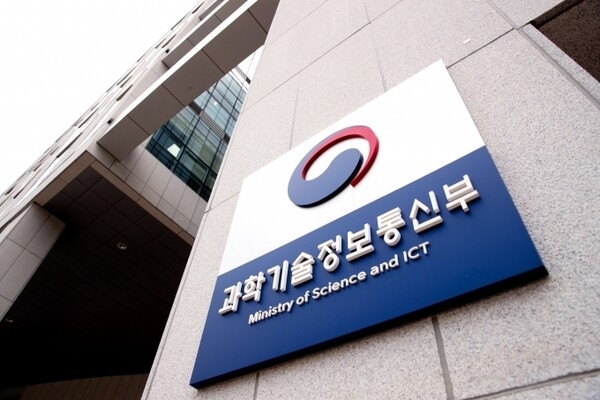
South Korea's Ministry of Science and ICT will build a government-wide integrated management system to address duplicated construction and weak quality control of public-sector AI training data.
The ministry said on Aug. 13 it will overhaul the current AI Hub into an "integrated provision system for AI training data" so public institutions and others can check in advance whether planned datasets overlap with existing ones. The plan follows audit results on "the status of fostering the AI industry III (AI training data)" released the previous day by the Board of Audit and Inspection.
The audit found cases in which public institutions pursued projects without procedures to check other agencies' data-building plans and performance, leading to duplicate construction of similar AI training datasets. As of November last year, MSIT was disclosing 908 types through AI Hub, while 26 bodies including the Ministry of Food and Drug Safety, the Seoul Metropolitan Government and the Korea Expressway Corp had also built and operated 313 types separately.
The audit also found cases in which other public bodies additionally built datasets similar to those MSIT had created on wild animals, household waste, concrete cracks and eggs. It also found that MSIT and other agencies each built similar datasets in areas including pills, oral care and autonomous driving.
Quality management levels also varied by institution. According to the Board of Audit and Inspection, 9 of the top 20 institutions in AI training data-building performance were receiving delivered data without third-party quality verification, and some agencies had no separate quality management standards. In road-driving CCTV data built by the Korea Expressway Corp, location information by vehicle needed for AI training was missing, and in Seoul's bulky waste data, there were cases in which file names differed from the actual images.
In response, MSIT is overhauling AI Hub into an integrated provision system so AI training data held by public institutions and the private sector can be registered, linked and searched in one place. It plans to develop related functions such as intelligent search and begin pilot operations within this year.
The ministry plans to have individual public institutions check similarity and duplication with existing data through the integrated provision system before newly building AI training datasets. It will also consult with relevant ministries to draw up specific rules and procedures for this.
It will also overhaul the quality management system. MSIT plans to share with ministries, local governments and public institutions the "AI data quality management guidelines" it applies to AI Hub data building. It also plans to distribute within the third quarter this year an "AI data build and use guide" that can be used across the full cycle, from planning data acquisition to building, quality management, use and opening.
MSIT said it will secure and open AI training data needed for private-sector AI innovation and work with relevant ministries so public-sector AI training data can be managed systematically.
 Seulgi Son
sageson@d-today.co.kr
Seulgi Son
sageson@d-today.co.kr