
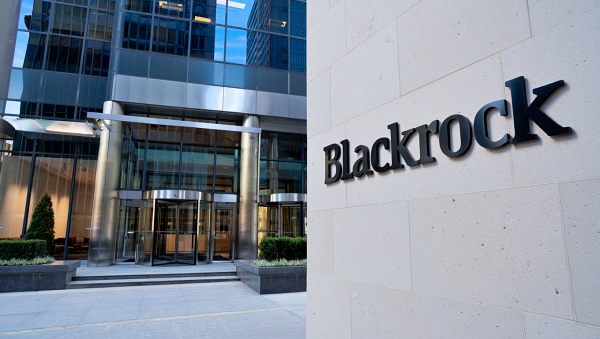
BlackRock proposed to financial advisers that they allocate 1 to 2 percent of portfolios to bitcoin.
On June 23, blockchain media outlet Cryptopolitan reported that BlackRock mentioned this on its official social media account and also pointed to the product page for its iShares Bitcoin Trust (IBIT).
BlackRock also said internally that recent market fund flows have not been favourable to bitcoin. Robbie Mitchnick (로비 미치닉), head of digital assets at BlackRock, said bitcoin has been going through a difficult stretch since October 2025. He said non-AI assets, including gold and precious metals, are being pushed out of investor interest, adding that "AI momentum is absorbing a significant portion of the market's attention."
Fund flows back that up. U.S.-listed spot bitcoin exchange-traded funds have seen outflows for more than 45 sessions, with cumulative outflows topping $7.8 billion. Bitcoin was trading around $62,500, down sharply from a peak above $120,000 late last year.
IBIT was not an exception. The product drew large inflows shortly after its launch in January 2024, but has recently faced outflow pressure. Its net assets are still about $49.0 billion by Sosovalue tallies, but it saw $171.96 million leave in a single day on June 22.
Competition for institutional money is also shifting. Recent talk of a SpaceX initial public offering and a listing push by Anthropic, which is known to be targeting a $1 trillion valuation, is described as competing for institutional funds that once flowed into crypto products. This is also cited as the background to viewing the change as a shift in the allocation environment rather than BlackRock abandoning bitcoin inclusion itself.
BlackRock is watching other variables over the medium to long term. Mitchnick pointed to U.S. government debt and fiscal deficits as the factor most likely to re-stimulate bitcoin demand over the next year. He also said fiscal policy debate could re-emerge around the midterm elections.
Interest rates were also presented as a key variable. Mitchnick said bitcoin, like gold, is negatively affected by rising interest rates. That implies the current pattern of fund outflows could change if the rate path and fiscal concerns line up again.
BlackRock also launched the iShares Bitcoin Premium Income ETF, BITA, on June 16. BITA uses a covered call strategy that generates cash flow by selling options each month on about one quarter to one third of its bitcoin holdings. Jay Jacobs (제이 제이콥스), head of U.S. equity ETFs at BlackRock, said the product targets annual returns of 15 to 25 percent, but in exchange gives up about 30 percent of bitcoin upside.
BITA charges a 0.65 percent fee, and had net assets of about $10.5 million at launch. BlackRock sees financial advisers, insurers and pension funds that have shied away from bitcoin because it lacks cash flow as its main demand base. Jacobs also said about 75 percent of IBIT buyers had never owned an ETF before buying a bitcoin fund, and that many later broadened their investments into BlackRock funds tied to the S&P 500, gold and AI.
Ultimately, BlackRock's message has two strands. It says bitcoin outflows are continuing in the short term amid the AI tilt, but that a small allocation of 1 to 2 percent remains valid from an asset allocation perspective. It said attention is on whether U.S. fiscal instability and interest-rate trends will shift the direction of institutional money again.
Bitcoin’s role in portfolios is evolving, and it could be considered a complementary diversifier. We believe a modest allocation (typically ~1–2%) could impact return potential in a portfolio while maintaining appropriate risk tolerance. Hear more from Michael Gates on how… pic.twitter.com/oOIRfq6F4D
 Yoonseo Lee
yslee@d-today.co.kr
Yoonseo Lee
yslee@d-today.co.kr