
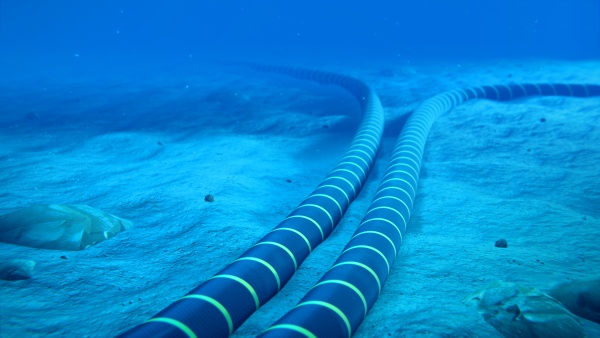
Southeast Asian countries are stepping up efforts to expand regional power grids using subsea power cables, but the real hurdle is institutional rather than technical, an analysis said. To expand cross-border electricity trading, it said shared planning, cost sharing and building a marine governance system should come before cable installation.
CleanTechnica, an electric vehicle outlet, reported on Sunday that energy think tank Ember said in a recent report that ASEAN countries must address institutional challenges before technical issues in subsea power interconnection projects.
The analysis is based on the "ASEAN Interconnection Masterplan Study III". The plan says 18 new and existing interconnectors are needed to more than double ASEAN’s regional interconnection capacity by 2040 from 7.7 gigawatts. Five of them are subsea power cable projects. Ember stressed that the key to success is not cable technology but building a cross-border cooperation framework.
Energy analyst Alni Demoral said cross-border subsea power grid projects are increasingly institutional in nature rather than technical. He said such interconnectors, if built, could strengthen energy security and support securing cheaper electricity, expanding cross-border power trade and the low-carbon transition.
In the background is Southeast Asia’s uneven distribution of renewable energy resources. The Mekong region has abundant hydropower resources, and solar and offshore wind development is also expanding rapidly. Subsea power cables are drawing attention as key infrastructure to move this electricity from production areas to consumption areas.
Archipelagic countries such as Indonesia and the Philippines also rely heavily on subsea transmission networks when connecting domestic power grids. The Philippines is already using high-voltage direct current (HVDC) technology to link power grids on its main islands.
Ember identified three core tasks ASEAN must solve: a regional joint planning system, standards for cost sharing and marine governance.
It said a regional planning function is needed first. It said a shared decision-making structure on which projects to prioritise and how to set the investment sequence is necessary to maximise benefits across the region.
Cost sharing is also an important task. Since cross-border power networks deliver benefits across multiple countries, investment costs should also be allocated based on shared standards. Otherwise, it said, separate negotiations could be repeated for each project, increasing timelines and costs.
There is also the issue of marine governance. Subsea cables pass through waters where territorial seas and exclusive economic zones (EEZ), shipping routes, fishing grounds and telecommunications cables overlap. The analysis said this requires a complex coordination system involving not only energy authorities but also maritime and environmental agencies.
Ember proposed that, in the short term, ASEAN should put into practical operation a joint power grid planning function and build a structured cost-benefit analysis system and a working group dedicated to subsea cables.
Felix William Fuentevilla (필릭스 윌리엄 푸엔테벨라), chairman of the Philippines’ state-run energy company, said, "Europe’s experience shows that the success of subsea power cable projects depends not only on technical feasibility but also on the ability to coordinate planning, regulation, financing and marine governance."
ASEAN has reaffirmed its commitment to regional energy integration by signing an enhanced memorandum of understanding on the ASEAN Power Grid in 2025. The industry believes the success or failure of future subsea power cable projects will depend less on technology than on how effectively cross-border cooperation systems are built.
 Jinju Hong
hongjj@d-today.co.kr
Jinju Hong
hongjj@d-today.co.kr