
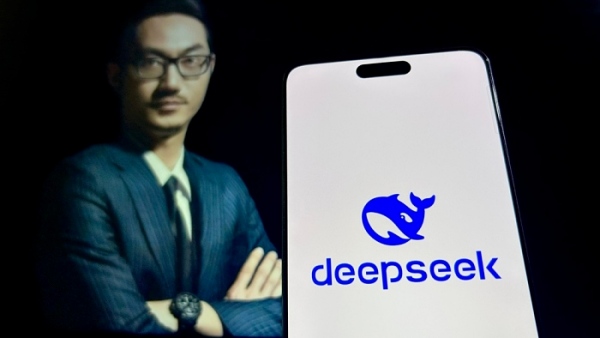
[Digital Today reporter Chi-gyu Hwang] Chinese AI startup DeepSeek on July 31 (local time) released its new cost-effective coding model, V4 Flash.
Axios reported on Aug. 1 that V4 Flash delivered performance close to Anthropic's Claude Opus 4.8 in tests of complex coding and autonomous software tasks. It outperformed Opus 4.8 on the Arena front-end coding leaderboard, and its price-performance was the best in its class.
Opus 4.8 costs $25 per minute of output, while DeepSeek offers its model for about 28 cents. That is about 99 percent cheaper.
As Chinese models such as Kimi K3 pressure the U.S. market, price competition across the AI industry appears to be intensifying in July.
OpenAI also cut the price of its low-cost model GPT-5.6 Luna by 80 percent on July 30, three weeks after launch. Google released three new Gemini "Flash" models focused on efficiency. Meta launched a closed model for developers and applied an aggressive pricing policy.
In Anthropic's case, it is keeping the price of its top-tier Claude model and betting that developers will pay extra for safety and precision, Axios reported.
Axios said DeepSeek's V4 Flash is an example showing that even the most intelligent software is rapidly becoming a commodity.
When products become commodities, such as consumer electronics or gasoline, buyers care more about price than who made them. As performance gaps among top models narrow, AI applications are becoming less tied to specific companies and buyers have more room to choose based on price, Axios reported.
There are also forecasts that the potential for an "intelligent router" that automatically selects the optimal model by weighing performance, speed and price will grow. That means that even if companies spend tens of billions of dollars to build better models, the edge may be temporary and may not translate into lasting pricing power.
Cheap AI is positive in that it can lead to greater demand. OpenAI also believes it can make up for thinner margins with overwhelming usage. With the United States and China both competing to make intelligence cheaper, whether that can lead to profitability has emerged as a key issue, Axios reported.
 Chi-gyu Hwang
delight@d-today.co.kr
Chi-gyu Hwang
delight@d-today.co.kr