
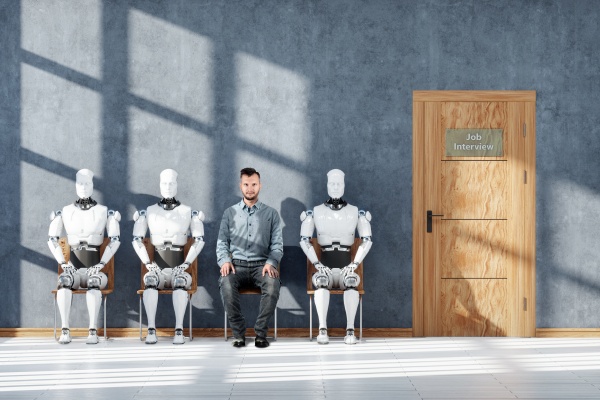
The spread of generative artificial intelligence (AI) has increased work efficiency for tech workers, but it is also adding to the burden of extra learning to keep up with new tools and models even after work.
Business Insider reported on Saturday that some developers and designers are spending 10 to 20 hours a week at night and on weekends testing AI tools. They are also paying subscription fees and training costs out of their own pockets.
Mahir Sharma (마히르 샤르마), a software engineer at a big tech company, built an AI agent in his own time to negotiate U.S. hotel room rates. It was a personal experiment separate from his company work. He said AI now allows him to finish some tasks in a few days that used to take months.
The changes are also increasing the burden of extra learning. Sharma pays out of pocket to use coding tools such as Cursor and spends about 20 hours a week on additional learning and experiments.
The burden is not only a personal choice. In a survey by Ernst & Young of about 1,000 office workers across six U.S. industries last year, 85 percent said they are learning how to use AI outside working hours. It means AI saves time while creating a structure that pushes that time back into learning.
Changes in the hiring market are also in the background. Meta and Microsoft have laid off thousands of people in recent years, but offered compensation packages worth millions of dollars to top AI talent. LinkedIn hiring data also showed that AI engineer hiring has surged since 2022, while hiring for traditional engineering roles has stalled or fallen.
An example also emerged of job insecurity turning into learning pressure. Tanvi Pisal (탄비 피살), who worked as a product designer at a U.S. AI healthcare startup, said she became concerned in early 2025, after leadership meetings, that AI could automate some user experience (UX) and product design work. She began building AI capabilities but was eventually laid off in October last year. An email the company sent at the time said the layoffs were related to rapid AI adoption.
Pisal, now working as a contract UX designer at a big tech company, continues to spend 10 to 15 hours a week outside work experimenting with tools and attending workshops. She spent hundreds of dollars on subscriptions to ChatGPT and Claude and on various workshops. She said, "If I do not spend even a few hours on the weekend keeping up with tech trends and testing tools, I start falling behind."
Not all tech workers feel the same level of pressure. Manoj Agarwal (마노지 아가르왈), a senior engineer at a large software company, said the company provides access to the latest AI tools, allowing him to build capabilities during work. He said his outside-of-work experimentation time is a few hours a week and subscription costs are about $60 a month, or about 92,000 won. That suggests the training environment matters more than time.
Sentiment inside Amazon was mixed. Udit Mehrotra (우디트 메흐로트라), head of product, said he used evenings and weekends last December to build 10 apps over about a month, using Claude Code as his main assistant tool. He said he is now trying to shift to a more sustainable way of learning. Amazon said it provides an internal learning hub and training resources to help employees find AI tools related to their work, and encourages AI experimentation within day-to-day work.
By contrast, Abhinav Bora (아브히나브 보라), Amazon's senior applied scientist, said he spent $3,000 over the past year on AI tools, conference fees and professional memberships, and is also putting 8 to 12 hours a week into AI learning outside work. He said most of his daytime is consumed by meetings and deliverables. He described the situation as a "learning tax" that blurs the boundary between personal time and job development. He said, "I am not worried that a single AI tool will replace me overnight," adding, "The bigger worry is becoming technically inadequate in a field where the baseline keeps moving."
AI is lifting productivity for tech workers while shifting additional learning costs and time needed to stay competitive onto individuals. Depending on how much training and access to tools companies provide during working hours, the size of the AI learning burden may widen even among workers in the same tech roles.
 Yoonseo Lee
yslee@d-today.co.kr
Yoonseo Lee
yslee@d-today.co.kr