
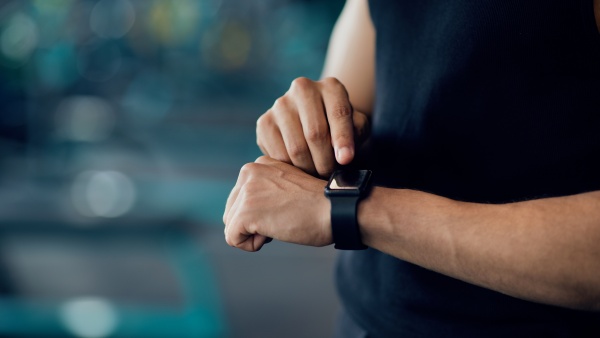
The smartwatch market is steadily growing, but some consumers are showing a trend toward seeking simpler wearable devices. The driver is not a lack of features but fatigue with constant connectivity and notifications.
On June 19 local time, IT outlet Engadget reported that smartwatches have established themselves as a representative wearable device over the past decade. A key strength is the ability to check notifications and manage health data without taking out a smartphone.
In the early days, there were expectations that smartwatches would reduce dependence on smartphones. The logic was that quickly checking only needed information on the wrist would help users focus more on their surroundings.
Over time, some users began to describe a different experience. Engadget pointed out that rather than freeing users from smartphones, smartwatches became devices that make users respond more often to alerts and information. One user quoted in the article said a smartwatch kept them connected to unnecessary information and stimuli they had wanted to get away from.
The issue is not a lack of features. Smartwatches offer functions such as checking schedules, message alerts, health management and exercise tracking. But criticism has also emerged that as these functions increase, they demand users' attention in a way similar to smartphones.
The trend also connects with the digital fatigue that has been spreading recently. Printed books, vinyl records, digital cameras, film cameras and cassette tapes have also been drawing renewed attention, especially among younger generations, and this is interpreted in the same context. After technology came to dominate everyday life, some consumers began to value experiences that are less connected.
Still, the change does not mean the smartwatch market is shrinking. According to the market research industry, the smartwatch market continues to grow. Most consumers choose smartwatches for health management and convenience functions, and related product categories keep expanding. The shift is closer to a diversification of consumer choices than a contraction of the market.
In this process, minimal-function wearables are drawing attention. These products focus on core functions such as exercise records and health tracking rather than offering a wide range of apps and notification functions like smartwatches. Users can obtain needed health data without being constantly pressed to respond like they are with smartphones.
The industry sees this trend as a possible new direction for the wearables market. As big tech companies recently move to expand smartglasses and next-generation wearables markets by emphasizing artificial intelligence (AI), attention is on the fact that some consumers prefer simpler, less connected devices.
Ultimately, the key point is that the basis of competition in wearables is not only about adding features. Users may want a less disruptive experience rather than more functions. That is why there are suggestions that even if the smartwatch market grows, minimal-function wearables could secure separate demand.
 Jinju Hong (홍진주)
hongjj@d-today.co.kr
Jinju Hong (홍진주)
hongjj@d-today.co.kr