
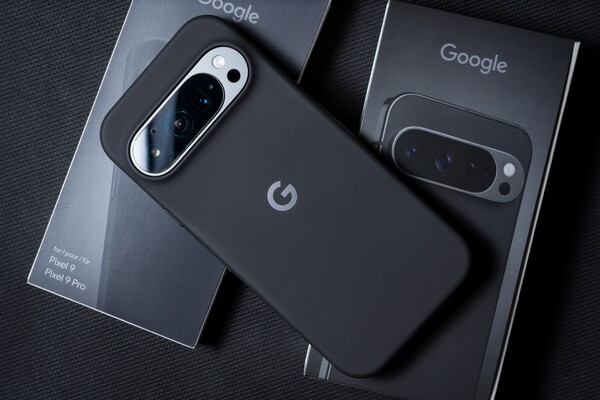
[DigitalToday reporter Jinju Hong (홍진주)] Google has begun an experiment to build a low-cost data centre using end-of-life Pixel smartphones. The plan is to reuse smartphones nearing disposal as computing resources to cut costs and electronic waste at the same time.
TechRadar, an IT media outlet, reported on June 20 that Google and researchers at the University of California San Diego (UC San Diego) are working on a project to convert retired Pixel smartphones into a general-purpose computing platform.
The core idea is to reuse the remaining processing power in smartphones in a data centre environment. Researchers removed components not needed for server operation, including the display, battery, camera, speaker and outer casing, leaving only the mainboard with the system-on-chip (SoC). They then replaced the Android operating system with a Linux-based environment commonly used in data centres, designed to run orchestration platforms such as Kubernetes.
The project begins with an environmental issue. Google Research pointed out that end-of-life mobile devices worsen embedded carbon from the manufacturing process and the electronic waste problem. It therefore judged that using smartphones left unused or discarded as new computing resources could be more efficient.
The performance is not at a level to replace the latest data centre servers, but it showed enough potential for educational institutions or small-scale services. Researchers said smartphones released three years ago posted better single-core performance than some server configurations. They also found that bundling 25 to 50 retired smartphones could deliver computing performance close to a single dual-socket server processor.
Cost savings also stand out. Researchers explained that what matters is not whether older smartphones are faster than the latest servers, but whether they can provide practical computing performance at much lower cost.
In an actual test, a cluster of 20 smartphones reliably supported an application used by more than 75 students. That means schools or educational institutions could run their own services using stored smartphones or recycled devices without relying on cloud services.
The researchers are also pushing to build a smartphone data centre of about 2,000 devices. The facility is being designed to support about 100 classes simultaneously, with costs expected to be much lower than building new traditional server infrastructure. They also cited rising memory and storage prices, which have increased the cost of building new servers, as a factor behind the project. The experiment is meaningful in that it goes beyond simply recycling electronic waste and seeks to use smartphones as actual service infrastructure.
There have been studies in the past on reusing older smartphones for monitoring systems or computing tasks, but this effort differs by including a software stack and management system tailored to a data centre operating environment. NASA reused a Qualcomm 801 processor, first introduced in 2014, for navigation functions in the Mars helicopter Ingenuity and the Perseverance mission.
Still, whether it spreads in practice depends on how well consumer hardware can withstand always-on operation in a data centre environment. The researchers plan to release the full platform within this year, and will verify durability and operational efficiency together in a continuous operating environment.
 Jinju Hong
hongjj@d-today.co.kr
Jinju Hong
hongjj@d-today.co.kr