
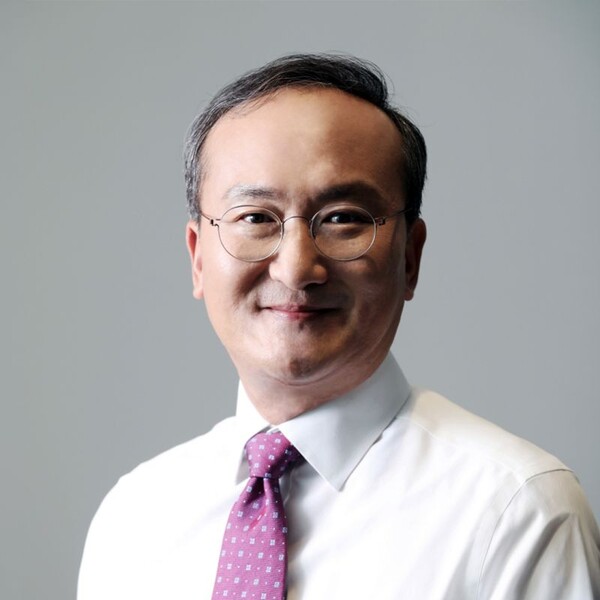
Lee Suk-hee (이석희), former head of SK On, has returned to the semiconductor industry. Intel said on Thursday it appointed Lee as executive vice president of its foundry business. Lee will oversee advanced packaging, system integration, and back-end technology development and manufacturing across Intel Foundry, and will report directly to Intel CEO Lip-Bu Tan (립부 탄).
Lee has close ties to Intel. He previously held engineering leadership roles at Intel and also built a career in academia. He graduated from Seoul National University’s department of materials science and engineering and earned a doctorate in engineering at Stanford University in the United States. After returning to South Korea, he served as CEO of SK hynix from 2018 to 2022. From 2023 to this year, he led SK Group’s battery business as CEO of SK On. He returns to the industry one month after stepping down as SK On president last month.
Intel said it will also run advanced packaging as an independent business unit with dedicated leadership. Under Lee’s leadership, Intel plans to expand advanced packaging technologies such as EMIB-T and HBI into a mass-production system.
Tan said advanced packaging and system integration are becoming core capabilities that define next-generation computing systems. He said Lee has deep expertise and strong operational execution capabilities in leading complex, large-scale technology and manufacturing organisations.
Lee said demand for system-level integration is accelerating across AI and high-performance computing, and that Intel is in a unique position to lead advanced packaging. He said he is pleased to return to the company and help Intel with its technology leadership, manufacturing capabilities and fulfilment of customer commitments.
In the reshuffle, another foundry executive vice president, Naga Chandrasekaran, will continue to oversee front-end process technology development and manufacturing while reporting to Tan. The foundry business will be run under a two-track system separating front-end and back-end processes. Intel started as a CPU powerhouse, then entered foundry services after announcing its IDM 2.0 strategy in 2021. It formally launched Intel Foundry in 2024 and secured Microsoft as a customer. In April this year, Tesla decided to produce AI semiconductors using the 1.4-nanometre-class (14A) process, and Google was also reported to have entrusted Intel with part of its Tensor Processing Unit production.
 Suk Dae-geon
d2dg@d-today.co.kr
Suk Dae-geon
d2dg@d-today.co.kr