
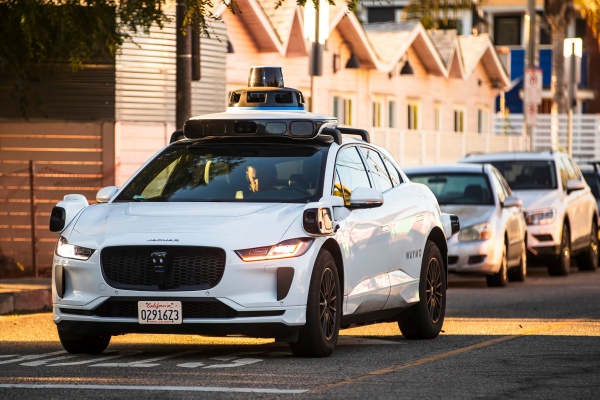
[DigitalToday reporter Jinju Hong (홍진주)] An analysis says robotaxis may be able to reshape the taxi and ride-hailing market, but will not easily replace the U.S. market for ordinary passenger cars. It says that even if autonomous driving technology removes drivers, robotaxis will be hard to choose over private cars unless they solve issues of cost, convenience and inefficiency from empty driving.
According to EV outlet Cleantechnica on June 16 local time, the core of the debate over robotaxis' growth potential lies in economics, not technology. The industry currently expects that once autonomous driving is commercialised, ride-hailing costs will fall sharply and could replace private cars. Some experts argue that removing drivers does not automatically make robotaxis overwhelmingly cheaper than private cars.
A Cleantechnica reader who has analysed the market for a long time, identified as "Matthew2312," said transportation-as-a-service models such as ride-hailing, taxis, delivery and rental cars are already widely available in the United States. He said the market size and growth path have been verified to some extent. He added that the assumption that new demand will surge explosively once autonomous driving is introduced has yet to be proven.
He estimated that buying a new car and driving it for 5 years would cost a total of about $0.75 to $1 per mile, including the purchase price, insurance and maintenance. He said that even if driver costs are removed from fares at current Uber or Waymo levels, prices are likely to remain similar to private-car costs.
Matthew2312 said robotaxis would have to fall to about $0.50 to $0.70 per mile to make U.S. consumers give up private cars. He said a robotaxi operator seeking to turn a profit would likely need to charge at least $0.80 per mile, making that price range hard to achieve.
The cost issue becomes more complicated because autonomous driving technology is not applied only to robotaxis. If autonomous driving becomes widespread, privately owned cars could also drive themselves to pick up family members or move according to schedules. In that case, households could reduce the number of cars while maintaining a similar level of convenience.
Some also say robotaxis are not clearly superior to private cars in convenience. A private car can be used immediately when needed, but a robotaxi requires waiting for it to arrive after being summoned. It is also difficult to use a robotaxi as a storage space for personal belongings.
The problem of empty driving is cited as a structural limitation of robotaxis. With private cars, users can go directly from point A to point B. Robotaxis must make additional trips to pick up passengers or, after dropping off one rider, to find the next. Such empty driving leads to higher operating costs.
For example, even if a robotaxi costs $0.50 per mile and a private car costs $0.77, the total cost could end up higher if the robotaxi must drive farther to pick up passengers, the analysis said.
Traffic congestion is also a variable. Another reader, Ivi, said the cost of using ride-hailing services in U.S. cities is currently about $2 per mile, while the cost of owning a private car is about $0.75 per mile. He said even if driver costs disappear, robotaxis will struggle to decisively outperform private cars on economic grounds.
He also pointed to many studies finding that the expansion of ride-hailing services is already worsening urban traffic congestion, and said robotaxis face the same problem. If the number of vehicles on the road increases, whether privately owned cars or robotaxis, traffic congestion will be difficult to resolve, he said.
Market-size projections are also limited. Matthew2312 forecast that robotaxis priced at current levels or slightly lower could replace human-driven taxis and grow into a market of about 350,000 vehicles by 2035. He also suggested the market could expand to about 500,000 vehicles if costs fall to less than $1 per mile.
Even so, he said a large-scale replacement of private cars in the United States is unlikely to happen easily. He said most consumers would not give up car ownership even at $0.70 per mile, and estimated that annual new robotaxi volumes in the U.S. market could remain below 50,000 vehicles.
Cleantechnica said it is necessary to distinguish robotaxis' true competitors. It said robotaxis can secure competitiveness in taxi and ride-hailing markets through cost reductions and service improvements. To replace the private-car market, it said, robotaxis would need to solve fare structures, operating efficiency and traffic congestion at the same time.
The outlook says the robotaxi industry may grow to the point of reshaping existing taxi and ride-hailing markets, but will need substantial time to replace private cars, the primary mode of transport for Americans.
 Jinju Hong
hongjj@d-today.co.kr
Jinju Hong
hongjj@d-today.co.kr