
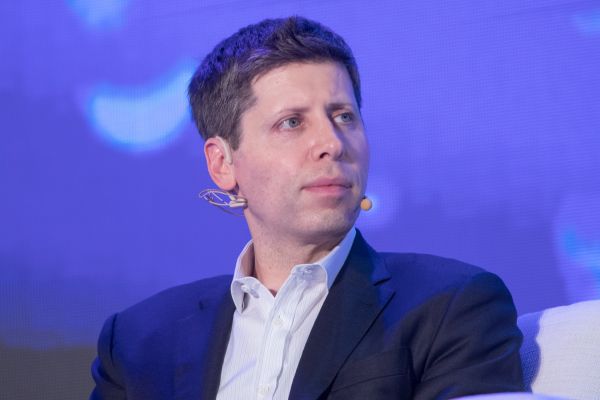
OpenAI CEO Sam Altman said the “AI job replacement” problem he had feared has not materialised.
Foreign media outlets including TechRadar and Reuters reported on Tuesday that Altman revised his earlier view on AI's employment shock in a video speech at a Commonwealth Bank of Australia event held in Sydney in May.
“I'm glad I was wrong,” Altman said. “I thought that by now, entry-level office jobs would have been cut a lot more, but that was not actually the case.” He added that he now better understands why that did not happen and acknowledged his intuition was off.
One thing that changed his mind was his own experience using AI for communications work. He had some Slack messages and emails answered by “Sam's AI,” but soon pulled back from the experiment. He said the issue was not only the quality of the replies, and that he did not want to hand off direct communication with people to AI. He said automation can look easy if work is viewed only as tasks, but in practice trust, relationships, judgement and responsibility operate together.
Altman said he did not believe AI has no impact on the labour market. He said OpenAI keeps releasing more powerful models and companies are looking for ways to apply them more effectively at work. Still, he said the change may look more like partial automation of roles than large-scale job losses.
“Whether for good or for bad, there's a good chance the job market will look very different from what we thought,” he said. “The ‘employment upheaval’ some in our industry talk about does not seem likely to come.” He said AI discussions often treat jobs as a “simple problem,” but running an organisation is far more complex than that.
The remarks also align with why the labour market has not seen a large immediate shock even though AI is already affecting research and corporate projects broadly. Many organisations still need people for decision-making, managing interpersonal relationships and being accountable when problems arise.
That has increased the likelihood that the next focus in adopting AI will be partial automation rather than full replacement. A key variable is where companies draw the line in practice between tasks handed to AI and areas kept centred on people.
 Yoonseo Lee
yslee@d-today.co.kr
Yoonseo Lee
yslee@d-today.co.kr