
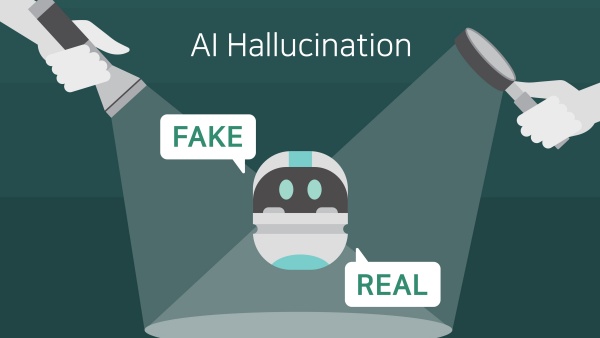
[Digital Today reporter Chi-gyu Hwang] The Financial Times (FT) reported on June 12 that an AI use report published by KPMG was confirmed to include many false examples based on AI hallucinations.
According to the report, KPMG’s “Redefining excellence in the age of agentic AI” described AI adoption cases at Swiss bank UBS, Britain’s National Health Service (NHS), Swiss Federal Railways (SBB) and Transport for London as if they were real, but they were written falsely.
Specifically, the report said UBS “integrates and operates AI agents for investment advice, risk management and compliance monitoring on a platform jointly developed with Microsoft.” A UBS spokesperson said this was “not true.” SBB and Transport for London also pointed out that the related claims were “not accurate.”
The errors were first identified by AI detection research organisation GPTZero, and the FT also verified them.
KPMG removed the report from its website while investigating the matter. The KPMG report had already been cited by several media outlets. A KPMG spokesperson said the firm “places importance on content accuracy and integrity and is ensuring compliance with guidelines for responsible AI use.”
GPTZero CEO Edward Tian warned that error-filled reports released by major accounting firms “pollute the soil of information” and that false information from “highly trusted institutions increases the risk of secondary hallucinations.”
Last month, EY also withdrew a study after errors such as fake footnotes were found.
 Chi-gyu Hwang
delight@d-today.co.kr
Chi-gyu Hwang
delight@d-today.co.kr