
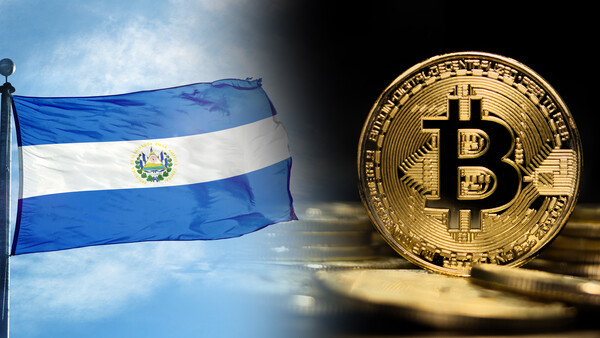
El Salvador is continuing government-level bitcoin accumulation even five years after introducing its bitcoin law.
Bitcoin Magazine reported on June 9 local time that the El Salvador government holds 7,677 BTC, worth about $480 million.
El Salvador passed the world’s first bitcoin law in a parliamentary vote on June 8, 2021, with 62 votes in favour and 22 against. The law made El Salvador the first country to grant bitcoin legal tender status. The government has since kept bitcoin as a pillar of its national strategy.
The accumulation drive became clearer after President Nayib Bukele (나이브 부켈레) said in November 2022 that he would buy 1 bitcoin a day. El Salvador has continued buying using dollar-cost averaging, and secured an additional more than 1,600 BTC over the 12 months since June 2025. When the market fell last November, it also carried out tactical buying of more than 1,000 BTC in a week.
There was a policy retreat, but the bitcoin-holding strategy itself did not change. In line with conditions for a $1.4 billion International Monetary Fund (IMF) loan package on Jan. 14, 2025, the El Salvador government removed bitcoin’s mandatory legal tender status. As a result, companies no longer have a legal obligation to accept bitcoin, and the Chivo wallet, an early core infrastructure promoted by the Bukele government, is also moving toward a phased shutdown.
The government has not sold a single bitcoin held in the national treasury. Bitcoin can still be used as a means of payment for users who choose to do so. El Salvador’s Bitcoin Office also said in early 2026 that the country would go all-in on both bitcoin and artificial intelligence (AI).
Tax policy is also being maintained. El Salvador does not impose capital gains tax on bitcoin and other cryptocurrency transactions. The government re-emphasised this policy in early 2026 as it moved to attract foreign investors. It is also pushing ahead with a bitcoin-based “volcano bond” plan and a Bitcoin City project powered by geothermal energy.
By contrast, the effect on expanding remittances, which Bukele presented as a key justification when introducing the bitcoin law, remains limited. El Salvador has an economic structure that relies heavily on remittances. Personal remittances from abroad account for about 24 percent of gross domestic product. Remittances in the first quarter of 2026 totalled $2.43 billion, but remittances via cryptocurrencies were only $17.38 million. That was 0.71 percent of the total.
As a result, El Salvador’s bitcoin policy shows two trends at the same time. The compulsory nature of bitcoin as legal tender has weakened, but the government continues to keep bitcoin at the centre of its fiscal and investment-attraction strategy. In particular, the fact that the government did not stop accumulating even after scaling back the Chivo wallet and abolishing mandatory acceptance remains the core of the current policy.
 Jinju Hong
hongjj@d-today.co.kr
Jinju Hong
hongjj@d-today.co.kr