
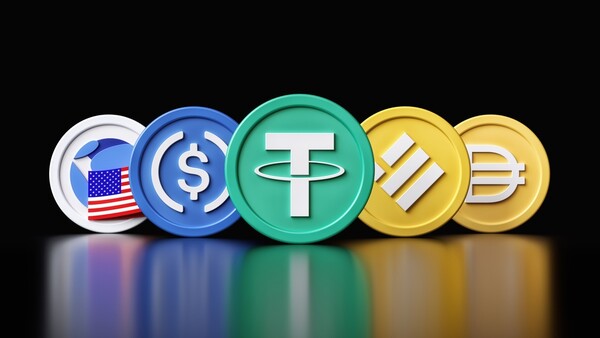
U.S. and British central bank officials have offered differing outlooks on dollar-based stablecoins.
On May 31, Cointelegraph reported that Federal Reserve Governor Christopher Waller (크리스토퍼 월러) told Reuters that the spread of dollar-pegged stablecoins could increase the global influence of U.S. monetary policy. By contrast, Megan Greene (메건 그린), a member of the Bank of England's Monetary Policy Committee, took the view that stablecoins' popularity could weaken within a few years.
Bloomberg reported that the two officials appeared together on a panel titled "Stablecoins and Monetary Policy" at the 32nd Dubrovnik Economic Conference hosted by the Croatian National Bank, and presented opposing views. Waller said that if more countries use dollar-based stablecoins, those countries could in effect import U.S. monetary conditions. He explained that the more dollar payment instruments are used beyond U.S. borders, the greater the spillover from U.S. policy rates and liquidity conditions could become.
Waller saw stablecoins less as assets that threaten financial stability than as a way to promote competition in the payments market. He called stablecoins "a means of generating competition in the payments market" and again expressed scepticism about central bank digital currencies, or CBDCs. He added that interest in CBDCs among major central banks has weakened compared with before.
Greene took a different view. She raised the possibility that stablecoins could be pushed out from the forefront of the market within a few years, and said tokenised deposits could have greater long-term momentum. She compared CBDCs to a "tortoise," stablecoins to a "hare" and tokenised deposits to a "rhinoceros." She added, "All three will emerge, but if I had to bet on just one, tokenised deposits," and said this area is more likely to grow significantly.
The debate also intersects with U.S. congressional discussions on stablecoin regulation. The Clarity Act, a bill under discussion in the U.S. Senate aimed at clarifying the digital asset market, has made slow progress due to differences over whether stablecoins should pay interest. The bill sets out a federal-level regulatory framework for digital assets and passed the Senate Banking Committee on May 15. It must still pass both chambers of Congress before it can reach the president's desk for signature.
The outlook for passage is also uncertain. With bank lobbying overlapping with the U.S. midterm election schedule, it is difficult to be sure whether final legislation will be completed in 2026. In this situation, U.S. Senator Cynthia Lummis (신시아 루미스) of Wyoming warned that legislative delays could weaken U.S. leadership in cryptocurrencies. Lummis said, "The United States built a dollar-centred financial system that has supported global stability for 100 years," and added, "We need to act now so the next system can also be built by the United States."
The split in views over stablecoins shows that competition in payment infrastructure and the direction of regulation have yet to be settled. In the United States, some see them as a way to extend dollar dominance, while in Britain there is a view that tokenised deposits could be a more realistic alternative. As a result, U.S. digital asset legislative debates and the institutional choices of major central banks are emerging as variables that will determine the pace of future stablecoin adoption.
 Yoonseo Lee
yslee@d-today.co.kr
Yoonseo Lee
yslee@d-today.co.kr