
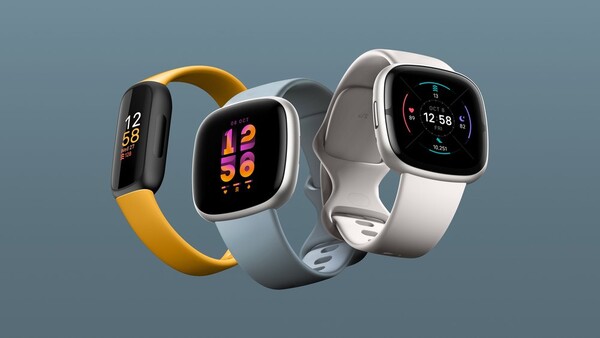
Google's new fitness tracker, Fitbit Air, showed performance similar to an expensive smartwatch in measuring heart rate and calories burned, but it showed noticeable errors in measuring running distance and pace. It is seen as competitive in health management features for the price, but limited for users seeking precise exercise analysis.
On May 31 local time, IT outlet TechRadar published results from a 10 km running test conducted while wearing Google's Fitbit Air and Apple's Watch Ultra3 at the same time.
The test was conducted on a 10 km course in the evening. The author wore Fitbit Air on one wrist and Apple Watch Ultra3 on the other. The author said they had planned to use a Polar H10 heart rate monitor as a separate reference device, but a chest strap malfunction prevented them from securing accurate comparative data.
The most notable result was in heart rate measurement. The difference in average heart rate between the two devices was only 3 beats per minute. Calorie burn also showed no big gap. Fitbit Air calculated less than 25 kilocalories more than Apple Watch Ultra3, but it was rated as effectively similar for everyday exercise logging.
The analysis said the result was meaningful given the price difference. Fitbit Air sells for $99.99, while Apple Watch Ultra3 costs $799. TechRadar noted that the Apple Watch Ultra series has shown accuracy in past tests that nearly matched professional heart rate measurement equipment. Based on that, it rated Fitbit Air's heart rate sensor as fairly reliable.
In contrast, the difference between the two products was clear in the accuracy of running records. Fitbit Air does not have built-in GPS and uses smartphone GPS information. Apple Watch Ultra3 has a high-precision built-in GPS. That difference was reflected directly in the running data.
Fitbit Air recorded an average pace about 10 seconds faster per kilometre than Apple Watch. TechRadar explained that given the high temperature at the time and the inclusion of uphill and downhill sections, Apple Watch's readings felt closer to the actual record.
A gap also appeared in distance measurement. Apple Watch Ultra3 logged total distance at 10.03 km, while Fitbit Air measured 10.43 km. That was a difference of more than about 400 metres despite running the same route. The outlet said, "A 3 beats per minute heart rate difference or a 23 kilocalorie calorie difference is not a big problem, but a distance error of more than 400 metres and a 10-second pace difference are hard to ignore."
There were differences in the detail of exercise data as well. Apple Watch Ultra3 provided advanced data used for running form analysis, such as stride length, vertical oscillation and ground contact time. Fitbit Air, by contrast, was limited to showing steps during exercise instead of such specialised indicators. In this test, it totalled 9,342 steps.
TechRadar said the comparison clarified Fitbit Air's position. It showed strong competitiveness for the price in health management features such as heart rate and calorie measurement, but it is difficult to expect precise exercise tracking at the level of a dedicated running watch.
A view also emerged that performance could be sufficient for general users. The outlet said that for everyday health management or light exercise logging, consistent data may matter more than perfect accuracy.
In the end, the assessment said Fitbit Air could be an attractive option for beginners who want to manage heart rate and activity at a price of around 100,000 won, but users who need precise running analysis, such as record competition or marathon training, are better suited to consider a specialised sports watch with GPS performance.
 Jinju Hong
hongjj@d-today.co.kr
Jinju Hong
hongjj@d-today.co.kr