
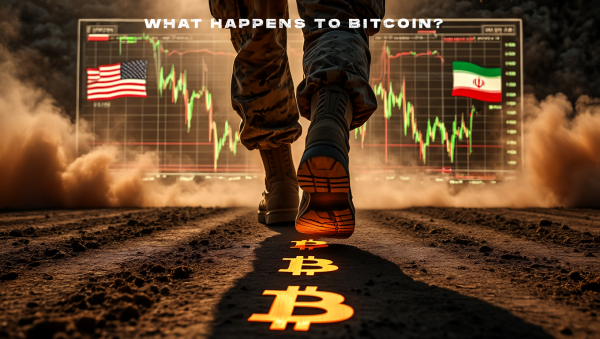
[DigitalToday reporter Jinju Hong (홍진주)] U.S. stocks surged in a short period after reports that the United States and Iran agreed on a draft to extend a truce, lifting market capitalisation by about $350 billion, while bitcoin widened its decline, showing a divergence from other risk assets.
According to blockchain media outlet BeInCrypto on May 28 (local time), the market priced expectations of progress in the talks as a strong positive for stocks, but the cryptocurrency market instead showed a risk-averse stance.
The draft was prepared through discussions between Steve Witkoff, who leads the U.S. negotiating team, and Iran’s Abbas Araghchi, in the form of a memorandum of understanding extending the current truce by 60 days. The draft was reported to include the start of nuclear talks, easing of a U.S. maritime blockade following a restoration of commercial shipping, and removal of mines in the Hormuz Strait. It also included that Iran would not pursue nuclear weapons development and would treat the handling of its stockpile of highly enriched uranium as a key task during the initial 60 days.
Market reactions immediately diverged. Soon after reports of progress in the talks, U.S. stocks rose to around record highs, and some market analysts assessed that expectations alone boosted market capitalisation by about $350 billion in 15 minutes. The agreement has not been finalised, and final approval by Donald Trump and consent from Iran’s top leadership are still pending.
The cryptocurrency market moved in the opposite direction. Bitcoin fell more than 3 percent on the day and traded below $73,000, down about 5 percent over 24 hours. Analysts say a risk-asset avoidance mood drove the decline, unlike stocks, despite the same expectations of easing geopolitical tensions.
U.S. treasury authorities maintained their position that sanctions and the maritime blockade would remain in place until an official agreement is signed. U.S. Treasury Secretary Scott Bessent warned that the United States would continue to target entities involved in controls on passage and logistics related to the Hormuz Strait, maintaining a pressure campaign.
Debate over bitcoin’s status as a hedging asset also flared again. Billionaire investor Mark Cuban said bitcoin no longer moves like a traditional hedge asset, adding that he sold part of his holdings and pointing to relative weakness versus gold. Blockstream CEO Adam Back countered, citing that bitcoin has risen from its lows even during periods of geopolitical tension.
In markets, there is a view that the next direction is likely to be determined by whether Trump gives final approval and by the pace of Iran’s lifting of maritime restrictions, with high volatility expected to persist in the short term.
 Jinju Hong
hongjj@d-today.co.kr
Jinju Hong
hongjj@d-today.co.kr