
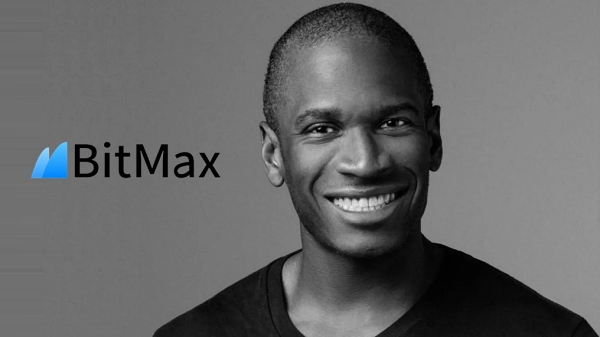
BitMEX founder Arthur Hayes (아서 헤이즈) warned bitcoin (BTC) holders not to treat Michael Saylor’s buying as a safety net that will protect their portfolios.
Cryptopolitan, a blockchain media outlet, reported on May 23 that Hayes said in an interview with Scott Melker (스콧 멜커) that Saylor’s role is not to protect retail investors but to defend Strategy, its shareholders and instruments piled on the company’s balance sheet.
He said, "Saylor is not there to protect your bitcoin." He made clear that even if Strategy keeps buying bitcoin, its yardstick is the company’s funding structure and shareholder interests.
Hayes said Strategy’s potential buying could be signalled to the market to some extent. He said bitcoin could spike in the short term if STRC shows signs of rising above 100, its par-value level. In that case, market participants could read more clearly that Saylor may move within days to buy billions of dollars worth of bitcoin, and take positions in advance, he said.
The remarks also tie into the view that Strategy’s bitcoin purchases can no longer be explained solely as a simple long-term holding strategy. Strategy is buying more bitcoin through equity-linked financing while also repurchasing about $1.5 billion in convertible bonds. That means Saylor is in a position where he must handle bitcoin buying, leverage management, capital raising and responses to investors seeking returns at the same time.
Hayes said, "It does not look like Strategy will shut down its business immediately," but said its STRC dividend structure has aspects that rely on investor trust. He added, "In crypto, when you rely only on trust, it often does not end with good results." He said this did not mean Saylor was doing something wrong, but that investors should not treat the company’s designed financial products as having the same nature as bitcoin itself.
The market is also paying attention to signs that Saylor has recently put some distance between himself and his earlier stance of never selling bitcoin. Saylor has signalled that limited bitcoin sales could be used to improve the bitcoin-per-share ratio or secure funds for dividends. That is a sensitive shift for bitcoin investors who have viewed Strategy’s holdings like a "vault that never opens".
Melker also interpreted Saylor’s remarks as an unavoidable message as the manager of a listed company. He said Saylor did not directly talk about the possibility of selling some bitcoin, but that he must show shareholders, STRC buyers and the U.S. Securities and Exchange Commission that bitcoin is not an impaired asset and can support dividends and protection for STRC investors. Because losses to retail investors could occur, a listed company’s chief executive officer cannot speak like an anonymous account in the crypto community, he said.
Hayes said Coinbase’s Brian Armstrong (브라이언 암스트롱) is under a similar structure. He said Armstrong also cannot make harsh remarks about crypto prices and must, in reality, prioritise his duty to protect shareholders.
Ultimately, the core of the remarks is that retail investors should not interpret Strategy’s bitcoin buying as a structural safety valve they can trust and lean on. Strategy’s buying may continue, but the starting point is not the overall bitcoin market. It is the company’s capital structure and shareholder interests, the remarks reaffirmed.
LFG!!!!! https://t.co/CTNK4hSSWj
 Yoonseo Lee
yslee@d-today.co.kr
Yoonseo Lee
yslee@d-today.co.kr