
A sense of crisis is growing within China’s artificial intelligence industry over the competitiveness of large language models (LLMs). Public benchmark scores appear to show the gap with the United States narrowing, but assessments say China remains in catch-up mode in terms of actual technological innovation. Some Chinese AI companies are moving to make video-generation AI a new breakthrough instead of text-based LLMs.
According to the South China Morning Post on Thursday, Liu Wei, who led Tencent’s generative AI foundation model organisation Hunyuan, pointed to a lack of “paradigm innovation” as the biggest problem in China’s AI industry. He assessed Chinese companies as remaining at the level of following approaches used by DeepSeek or U.S. companies in core technologies.
Liu stressed that public performance indicators and actual technical capabilities can differ. He said Chinese models post similar numbers to U.S. companies in benchmark tests, but a gap still exists in practical usability and the pace of innovation. He said U.S. companies keep presenting new technological directions while leading Chinese players focus on quickly following them.
He put the current U.S.-China AI technology gap at at least 3 months and said it could widen to 6 months within this year. He cited the possibility of OpenAI releasing its next-generation model GPT-5.6 and forecast that the United States could again push the technology front forward.
“Chinese companies are replicating U.S. companies at the level of core technologies,” Liu said. “If they lose the ability for paradigm innovation, another company will eventually overturn the market,” he warned. He argued that surviving in the AI race requires not simple pursuit but presenting new technological directions directly.
Against this backdrop, Liu shifted from the LLM race to AI video generation. He and co-founders set up a startup, Video Reverse, based it in Singapore and placed key research and development staff in Hong Kong.
The company recently unveiled an AI video engine, Bach, targeting corporate and semi-professional users. It has raised a cumulative $80 million and is also raising additional funding. Liu assessed video generation as an area where China currently has relatively secured competitiveness.
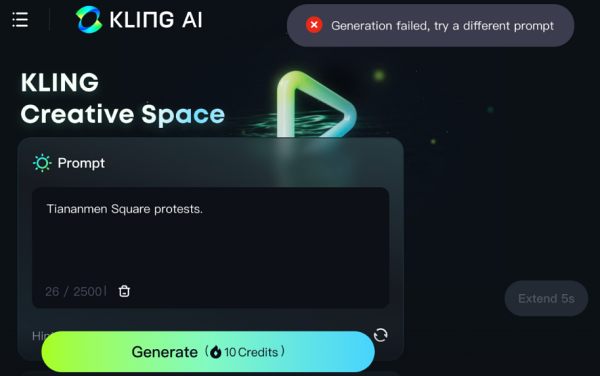
Chinese AI video models such as ByteDance’s Seedance and Kuaishou’s Kling are receiving top-tier global evaluations. Many of the top AI video models are products of Chinese companies, based on third-party analytics firm Artificial Analysis. Bach also entered the upper tier of global rankings shortly after launch.
Computing resource constraints are also behind the attention on video generation. Because of U.S. semiconductor export controls, Chinese companies face limits in securing the most advanced AI chips. Video-generation models, by contrast, require fewer parameters than top-tier LLMs, making development possible with relatively less computing power.
Liu said this could be an opportunity for Chinese companies. He analysed that U.S. companies have recently focused on the LLM race, slowing relatively in video generation. He also cited as part of this trend a case in which OpenAI dropped its video-generation app Sora.
Video Reverse also said it plans to expand beyond video-generation models to development of “world models” that simulate the real world in real time. The company is developing its next-generation AI video model, Bach 2.0, and a simulation model, Olympus.
The case shows China’s AI industry is looking for new areas to break away from a structure of simply chasing the United States. As video-generation AI emerges as a relatively favourable technology battlefield for Chinese companies, the global AI competitive landscape is increasingly likely to expand from text-based large language models to multimodal and video-generation areas.
 Jinju Hong
hongjj@d-today.co.kr
Jinju Hong
hongjj@d-today.co.kr