
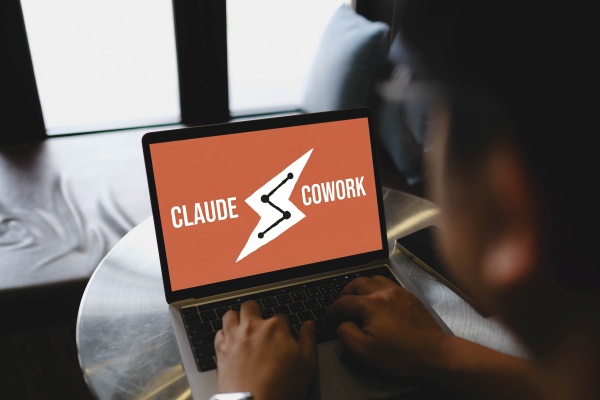
Anthropic has disclosed an internal operations case showing it is using its artificial intelligence (AI) agent Claude Cowork to automate management of thousands of customer accounts and calculate sales priorities. The move is drawing attention as AI goes beyond basic help with document drafting and enters sales strategy and decision-making systems.
Online media outlet GigaZine reported on May 22 that Travis Bryant, who is responsible for U.S. mid-market sales and market development, said he is using Claude Cowork to handle meeting preparation, revenue forecasting and customer priority assessments.
Bryant’s customer base spans industries including technology, finance, healthcare, manufacturing and retail. He explained that a sales leader’s core task is deciding where to focus limited time and resources. He also said that in practice, a significant amount of time was spent collecting and organising data scattered across multiple systems.
Bryant then assigned repetitive data collection and organisation work to Claude Cowork. Claude Cowork is an AI agent that can perform tasks such as viewing, editing, creating and moving files within a user’s PC environment.
Anthropic also shared specific examples. Each morning, Claude Cowork checks Google Calendar and automatically assigns a meeting space if a meeting with external participants has no room reservation. Before a customer meeting, it pulls spending data from BigQuery and combines it with Salesforce sales progress to create briefing materials. Bryant explained that this process saved him about 90 minutes a day.
Automating weekly sales forecast reports is also part of the effort. Every Friday, Claude Cowork loads data from Salesforce and BigQuery and generates a one-page summary report with major deal updates, changes in revenue outlook and forecasts by sales manager. The document is automatically shared before Monday meetings, and Bryant said it cut about 3 hours a week.
The biggest change was customer priority evaluation. Bryant built an AI-based scoring system covering about 4,000 customer accounts. In the past, the work involved multiple departments and required hundreds of hours.
Evaluation criteria varied by customer group. For technology companies, it reflected factors such as willingness to adopt AI, the feasibility of using Claude agents and the potential for additional revenue relative to existing spending. For general industries, it used measures such as the share of knowledge workers and the frequency of AI-related mentions in job postings.
Claude Cowork combined web information with Salesforce and BigQuery data to research each company and organise scores and the basis for each evaluation. Bryant said he reviewed the results, adjusted the weighting of some items and then expanded the scope of application.
An internal dashboard was also built. Sales staff can select their territory to see which customers to target first in order of higher scores, along with the basis for each evaluation item and similar cases that can be referenced.
Bryant predicted the approach could expand to tasks such as customer research, estimating market size and analysing compensation systems. "Thanks to Claude Cowork, I got back my time as a sales leader and can focus more on strategy and customer relationships," he said.
The case is seen as showing that AI agents are rapidly moving beyond simple productivity tools into real corporate operations and decision-making structures. It is also drawing market interest as the scope of AI automation expands quickly even in areas like sales organisations, where data and on-the-ground judgement are both required.
 Jinju Hong
hongjj@d-today.co.kr
Jinju Hong
hongjj@d-today.co.kr