
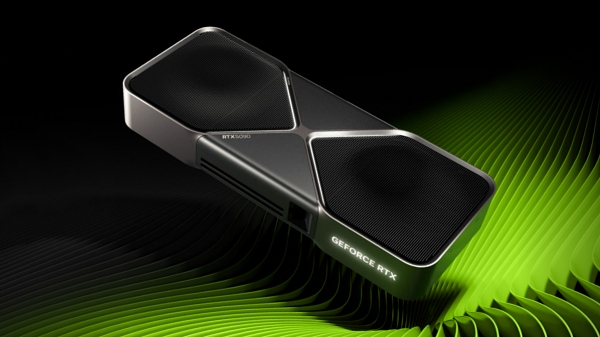
[DigitalToday reporter Jinju Hong (홍진주)] Nvidia will stop separately disclosing revenue from consumer and professional graphics cards starting this quarter.
On May 21 local time, IT outlet TechRadar reported that revenue from its graphics business, including GeForce and RTX Pro, will be folded into an “edge computing” line item.
The change reshapes Nvidia’s main performance categories into two pillars: data center and edge computing. Data center includes cloud, AI and supercomputing. Edge computing includes PCs, workstations, consoles, robotics, automobiles and telecommunications. That makes it harder to view revenue from graphics solutions on a standalone basis.
Nvidia posted $81 billion in revenue for fiscal 2027 first quarter. It was a record quarterly result, but a revamp of investor reports means the detailed flow of its graphics business will disappear from earnings tables. The outlet pointed out that “Nvidia no longer reports client graphics card sales separately.”
In the market, the move is being read as making Nvidia’s business focus clearer. With the center of gravity in the company’s performance shifting to AI, graphics cards have been folded into a broader category. The outlet assessed this as reflecting that Nvidia has “become an AI giant.”
It could, however, deepen concerns in the gaming market. With separate disclosure gone, it will become harder for outsiders to verify whether the GeForce business is expanding or shrinking. TechRadar described the step as “like draping a cloak of opacity over graphics revenue.”
Those concerns also tie in with recent product supply and launch trends. TechRadar said that amid GPU price increases linked to memory issues and continuing worries over production and inventories, even the widely discussed RTX 5000 Super refresh models are on hold. It also mentioned speculation that Nvidia may not release a new GPU at all this year.
Behind it is demand for AI chips. The outlet reported that Nvidia needs to put as many chips as possible, and more directly video memory, into AI graphics cards. It suggests resources could be concentrated on AI products, which are more profitable than consumer offerings.
That mood also carried into the keynote at consumer event CES 2026. Nvidia introduced DLSS 4.5 but did not mention GeForce GPU hardware itself, and only covered gaming monitors as hardware. It is a point that strongly reflects gamers’ perception that Nvidia’s priorities are shifting more sharply toward AI.
Two points will be watched going forward. The first is whether Nvidia maintains launches and supply of the GeForce lineup even after the disclosure revamp. The second is that the market will have to gauge the graphics business’s weight within edge computing through other indicators. The top-line figures have grown, but the presence of the gaming GPU business has become even more blurred in investor reports.
 Jinju Hong (홍진주)
hongjj@d-today.co.kr
Jinju Hong (홍진주)
hongjj@d-today.co.kr