
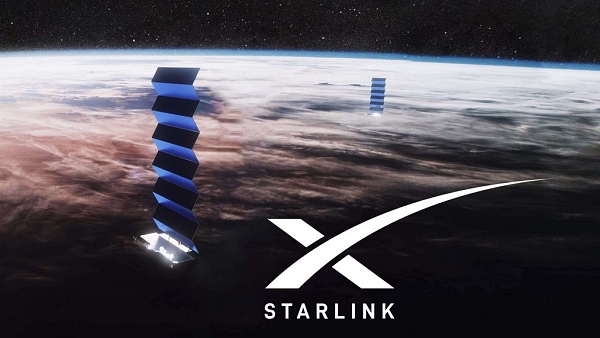
SpaceX’s main profit engine is not reusable rockets but its Starlink satellite internet service. Financial results disclosed ahead of a major initial public offering show Starlink accounts for most revenue and profit, shifting market attention from rocket technology to the durability of the Starlink business.
On May 21, CNBC reported that SpaceX said in its listing filing that 61 percent of total consolidated revenue last year came from connectivity services such as Starlink. The share rose to 69 percent in the first quarter of this year.
Starlink posted $11.39 billion in revenue last year, making it SpaceX’s largest business. It was also the most profitable. The connectivity services segment earned $4.42 billion last year, but the rocket launch business, which includes contracts with NASA and the U.S. Defense Department, recorded a $657 million loss. The AI segment loss totaled $6.35 billion.
In the market, an assessment is emerging that the disclosure made clear Starlink, rather than the space launch business, is SpaceX’s practical cash generator.
Starlink provides global internet service based on about 10,200 low-Earth orbit satellites. Since the first satellite launch in 2019, its service area has expanded to more than 160 countries. Users totaled 10.3 million in the first quarter, more than doubling from a year earlier.
Adoption by the aviation industry is also expanding. United Airlines, Southwest Airlines and Hawaiian Airlines have adopted Starlink for in-flight internet service. Elon Musk (일론 머스크), SpaceX’s chief executive, also said in December last year that Starlink’s commercial service was making "by far the largest contribution" to the company’s revenue.
SpaceX is using cash secured through Starlink to expand its AI and space data center businesses. Capital expenditure in the first quarter was $10.1 billion, more than doubling from a year earlier, with $7.7 billion used for the AI business. The company said in its listing filing that it "expects to be able to deploy space-based data centers from 2028." It also claimed it has "already solved" the hardest part of developing AI computing satellites.
The listing filing also made clear that as reliance on Starlink grows, regulatory and operational risks also rise. SpaceX explained in the filing that Starlink’s expansion depends on satellite deployment approvals and spectrum authorisations by regulators in each country. The company wrote there is "no guarantee" that renewals or expansion requests will be approved on time or approved without additional conditions.
Regulatory issues are already materialising in some countries. Namibia rejected a Starlink business licence in March, citing local ownership rules, and Taiwan also excluded the introduction of Starlink after SpaceX did not accept a request for a local joint venture. In South Africa, discussions are continuing over equity rules for foreign telecommunications operators.
There are also geopolitical disputes. Starlink has repeatedly been at the center of arguments over military use and service control during the war in Ukraine. SpaceX said it implemented measures this year to block Russia from unauthorised use of Starlink in long-range drone attacks. The company also operates a separate military satellite communications service called Starshield.
Competition is also intensifying. OneWeb, part of Eutelsat, is already operating more than 600 satellites, and Amazon has launched more than 300 satellites over the past year as it prepares to enter the low-Earth orbit internet market. Jeff Bezos’ Blue Origin is also pursuing the construction of a satellite network of about 5,400 satellites from late 2027. China is also expanding large-scale satellite constellation projects. In its listing filing, SpaceX identified more than 20 companies, including Amazon, Blue Origin, Viasat, AT&T and T-Mobile, as Starlink competitors.
The burden on the space environment is also growing. Starlink satellites have shorter lifespans than geostationary satellites, requiring continuous replacement launches on a 3 to 5 year cycle. SpaceX said the space environment is "inherently hostile" and that the orbital environment can cause satellite malfunctions and failures.
Concerns have also been raised about space debris and the so-called Kessler syndrome over a plan for which SpaceX applied to the U.S. Federal Communications Commission for launches of up to 1,000,000 low-Earth orbit satellites. Civic group DarkSky said the plan could increase the number of satellites in the night sky by about 70 times from current levels and called for an environmental assessment.
In the end, the likely investment focus of a SpaceX listing has increasingly shifted to the durability of Starlink, which is generating cash now, rather than rockets or future visions. At the same time, national approvals, security disputes, satellite replacement costs and space-environment regulations remain key variables that will determine Starlink’s growth pace.
 Jinju Hong (홍진주)
hongjj@d-today.co.kr
Jinju Hong (홍진주)
hongjj@d-today.co.kr