
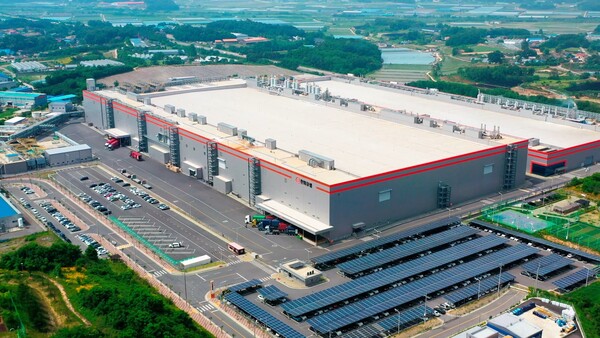
Hanwha Q CELLS said on May 21 it will supply Korean-made solar cells and modules to Korea South-East Power for what it called the largest solar power generation project ever at a single site in South Korea. Korea South-East Power plans to build a 400 MW solar plant on about 4.79 square km in Munnae-myeon, Haenam County, South Jeolla Province. It is targeting completion in June 2028.
The engineering, procurement and construction contractor plans to install about 640,000 solar modules at the site using cells produced by Hanwha Q CELLS in South Korea. The cells and modules will be produced entirely at its Jincheon plant in North Chungcheong Province, the company’s largest production base in South Korea. The supply is also drawing attention as part of efforts to strengthen the renewable energy supply chain based on domestic manufacturing. With global supply chains being reorganised and changes in the trade environment, the need for stable supply capacity and trusted quality is becoming more prominent, and the role of companies with production bases in South Korea is growing, the company said.
The project is in line with the 'First Basic Plan for Renewable Energy' released by the Ministry of Climate, Energy and Environment on May 19. The government set a goal of expanding domestic renewable energy capacity to 100 GW by 2030 and building 10 very large solar power complexes. The 400 MW Haenam project is seen as the first major implementation case under the plan. South Korea’s solar industry expects the project to help the market recover from a slump and become more active.
Yoo Jae-yeol (유재열), head of Hanwha Q CELLS’ Korea business division, said supplying high-efficiency Korean solar cells and modules to a large project created an opportunity to prove the technological competitiveness of South Korea’s solar industry. He said if the government’s renewable energy expansion policy continues alongside a push to broaden the use of domestically produced products, it is expected to have a positive impact on restoring the domestic solar industry ecosystem and expanding related investment. He added he hopes the project will help the solar market regain momentum, lead to a virtuous cycle of corporate investment and job creation, and lay the groundwork for growth in South Korea’s renewable energy industry.
 Daegeon Seok
d2dg@d-today.co.kr
Daegeon Seok
d2dg@d-today.co.kr