
[DigitalToday reporter Chi-gyu Hwang] "Now is the best era for developers, like a renaissance."
Amazon Web Services (AWS) on Wednesday, at the second day of AWS Summit Seoul 2026 held at COEX in Seoul, called the AI era the greatest time for developers and presented five requirements to become a so-called "renaissance developer" to lead it.
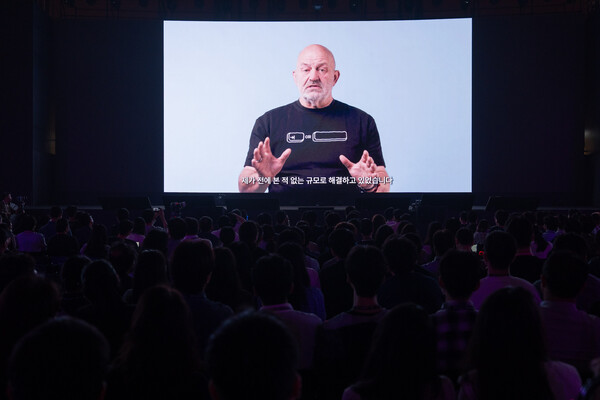
The event focused on AI, with presentations on various topics developers need in the AI era. Amazon Chief Technology Officer Werner Vogels (버너 보겔스) said in a video message for AWS Summit Seoul 2026 that with multiple technological innovations, including AI, space and robotics, progressing at the same time, this is the greatest era for builders. He cited curiosity, systems thinking, clear communication, ownership and versatility as capabilities a renaissance developer should have.
Seok-chan Yoon (윤석찬), lead tech evangelist at AWS Korea, then explained the five requirements in detail and stressed that even in the AI era, developers need broad capabilities like renaissance figures to remain competitive.
On curiosity, Yoon said software developers' motivation to learn begins with the question, "Why doesn't it work like this?" He said true learning continues through experimentation and failure. Citing the AWS Korea User Group (AWS KRUG), which started in 2012 and has been running for more than 14 years, he added that learning is inherently social.
On ownership, he stressed the principle that even if AI produces code, final responsibility rests with the developer. He said AI coding should be engineering, not gambling. He added that carefully reviewing generated code is essential.
Versatility can be summed up as a T-shaped talent who digs deep into one field while broadly connecting with other fields. Yoon said having the ability to move across diverse areas has greater value than being an expert who knows only one technology.
On the fourth requirement, systems thinking, he said that when AI makes code, people should look at architecture. He called on developers to be able to see structure, not code, to build resilient and sustainable systems.
On the final requirement, clear communication, he said ambiguity that arises in natural-language communication can affect software consistency. He presented specification-based development, which converts ambiguous natural-language prompts into clear specifications to control AI, as a practical way to use AI. He also introduced Kiro, an AI development tool provided by AWS.
Jae-hyun Shin (신재현), an AWS Community Hero at Woowa Brothers, which operates Baedal Minjok, and Min-tae Kim (김민태), an AWS Community Builder at Woowa Brothers, also took the keynote stage and shared experiences of using AI in development work to achieve results.
Shin said he solved, in just one month after adopting AI, a multilingual app launch task that he had been unable to resolve over the past five years, at an accuracy level of 94 percent. He said the success or failure of AI adoption depends not on model performance but on designing the environment in which AI works, stressing "harness engineering" as a keyword.
He said harness engineering is a methodology that takes an approach of designing the work environment itself so AI can consistently produce good results, rather than replacing an AI model with a better one.
Kim, the AWS Community Builder at Woowa Brothers, said a developer group that actively used AI agents in a legacy migration project using Kiro achieved a 69 percent improvement in productivity and a 2.4-fold increase in code output compared with a group that did not.
 Chi-gyu Hwang
delight@d-today.co.kr
Chi-gyu Hwang
delight@d-today.co.kr