
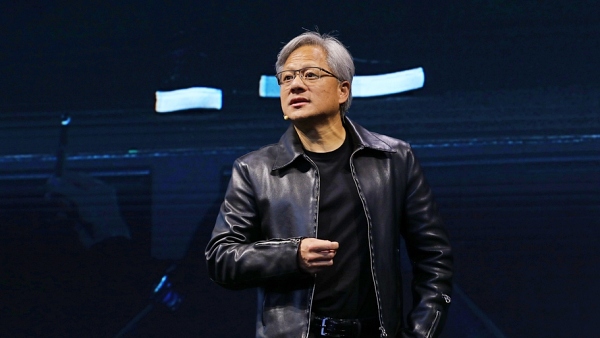
Nvidia has moved to target a new AI infrastructure market with its in-house central processing unit (CPU), Vera. Nvidia, which has grown as a GPU-focused company, is expanding in earnest into CPUs for the agent AI era, raising the possibility of changes to a market long dominated by Intel and AMD.
TechCrunch reported on May 21 that Nvidia CEO Jensen Huang (젠슨 황) said on an earnings conference call that Vera "opened a completely new total addressable market" for Nvidia. He put the market size at about $200 billion.
Vera is a CPU product Nvidia unveiled in March. It is sold on a standalone basis or supplied with next-generation Rubin GPUs. Huang described Vera as "the world’s first CPU designed from the ground up for agent AI."
Nvidia expects the spread of agent AI to change the structure of CPU demand itself. Huang stressed that while GPUs handle AI model inference and reasoning, CPUs become important in the process of agents using tools and carrying out tasks. He said that if AI agents operate in CPU-based environments as humans work in PC environments, massive long-term CPU demand could emerge.
He said, "There are 1 billion human users around the world, but in the future there will be billions of AI agents," adding, "Those agents will all use tools, and ultimately far more CPUs will be needed."
The market is interpreting Nvidia’s move into CPUs as a next-generation growth strategy. Intel and AMD have dominated the CPU market so far, but competition has intensified recently as cloud companies also move into developing their own AI chips.
Amazon Web Services recently disclosed that it signed an AI CPU supply contract with Meta. AWS CEO Andy Jassy has previously said the company’s AI chips could be competitive with Nvidia’s in some areas. Google is also stepping up AI infrastructure internalisation by developing its own TPU series.
Nvidia has highlighted "agent AI optimisation" as Vera’s differentiator. While existing data centre CPUs focus on efficiently processing multiple application instances, Nvidia said Vera is built to maximise AI token processing speed. It is a strategy to create a market different from existing CPUs through a computing structure specialised for agent AI environments.
It also presented early sales performance. Huang said standalone Vera sales this year have already reached about $20 billion. He said it is "only the beginning" and expressed confidence in the potential for demand to expand.
Nvidia’s earnings momentum also remains strong. The company posted a record $81.6 billion in revenue this quarter and gave revenue guidance of $91.0 billion for the next quarter. If Vera CPUs become a new pillar alongside continued GPU-led growth, Nvidia’s influence in AI infrastructure is likely to expand further.
A key question, however, is whether it will see actual large-scale deployment. Nvidia said major hyperscalers and system manufacturers are working with it to adopt Vera, but competition is also intensifying not only with Intel and AMD but also with big tech companies developing their own chips.
Ultimately, the market is watching whether Vera goes beyond a simple new product and helps Nvidia establish a new AI infrastructure standard after GPUs.
 Jinju Hong
hongjj@d-today.co.kr
Jinju Hong
hongjj@d-today.co.kr