
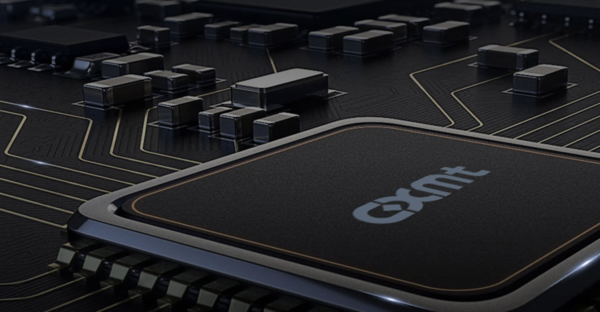
China's memory drive has finally moved into high-bandwidth memory (HBM). ChangXin Memory Technologies (CXMT) is pushing mass production of fourth-generation HBM3 and will switch 60,000 wafers a month, or 20 percent of its total capacity, to HBM-only production. Korea's memory industry is shielded by top-end HBM4 margins, but asymmetric losses are expected to widen in fifth-generation and lower HBM and in commodity DRAM.
Industry sources say CXMT is supplying samples to Chinese AI chip developers such as Huawei, targeting mass production of HBM3 by the end of 2026. Foreign media including Tom's Hardware reported CXMT plans monthly HBM3 output of 60,000 wafers, about 20 percent of its total monthly capacity of 300,000 wafers in 2026. Beyond CXMT, Wuhan Xinxin Semiconductor Manufacturing (XMC), Yangtze Memory Technologies (YMTC) and packaging company JCET are joining efforts to localise the HBM supply chain.
For now, it is difficult for China to catch up with Korea quickly. DigiTimes said CXMT's HBM3 commercialisation schedule has become uncertain and judged mass production in 2026 to be unlikely. If it uses only domestically made equipment, yield ramp-up could be slower. With access blocked to extreme ultraviolet (EUV) lithography tools, CXMT faces a structural limitation that forces it to rely on multi-patterning.
But the problem is not entry into HBM3 itself, but price disruption from CXMT's capacity reallocation. Industry sources say CXMT has already supplied older DDR4 chips at about half the market price and is aggressively expanding legacy products for mobile and PCs, taking advantage of a window when prices surged on a global supply shortage.
In this situation, if CXMT allocates 20 percent of its production capacity to HBM, those volumes will no longer flow into DDR5 or LPDDR5X for PCs and laptops, an analysis said. It said standard DRAM supply would shrink while AI-dedicated memory increases. That raises the likelihood of a new price-competition front in the low-spec HBM market.
◆ Asymmetric losses below fifth-generation, hidden by HBM4 margins
The current boom for Korea's memory industry is concentrated in top-end HBM4 margins. TrendForce said SK hynix and Samsung Electronics' memory business is expected to post a gross margin of 63 to 67 percent in the fourth quarter of 2025, surpassing TSMC's 60 percent for the first time in seven years. TrendForce said the main driver of the price surge was a tightening of commodity memory supply as the three major memory makers allocated 18 to 28 percent of DRAM capacity to HBM.
But this structure could show visible cracks as China enters HBM3. TrendForce forecast in its first-quarter HBM industry analysis report that the gap in average selling prices (ASP) between HBM3E and standard DDR5 will narrow sharply during 2026.
Korea's semiconductor strengths currently rest on three pillars: top-tier HBM4 specifications, dedicated supply for AI accelerators such as Nvidia Vera Rubin, and rising commodity DRAM prices. But if CXMT succeeds in mass production of HBM3, price pressure could emerge in mid- to low-tier lineups.
CXMT has already demonstrated a half-price push in DDR4, raising the possibility that HBM3 will follow a similar pattern. As China's domestic AI accelerator market expands around Huawei's Ascend series, margins for fifth-generation (HBM3E) and lower products could be compressed quickly if CXMT secures HBM3 share in its home market and then moves to expand into the global market.
Views in the industry are mixed. Some expect U.S. export controls on China to limit CXMT's global expansion, meaning Korea's industry will not take a direct hit. But TrendForce, citing some analysts and foreign media warnings in a 2026 outlook memo on SK hynix, said HBM prices could enter an adjustment phase after 2026 as competition intensifies and capacity expands. SK hynix has also cited price, supply and geopolitics as its three main risks for 2026.
An industry official said top-end margins from HBM4 and HBM4E will drive performance in the short term, but the timing of CXMT's stabilisation of HBM3 mass production and the pace of capacity expansion will be variables over the medium to long term. The key, the official said, is when asymmetric losses in fifth-generation and lower HBM and commodity DRAM will start in earnest.
 Suk Dae-geon
d2dg@d-today.co.kr
Suk Dae-geon
d2dg@d-today.co.kr