
Apple is moving to reorganise its hardware organisation to speed development of next-generation devices. The focus is to strengthen links between its in-house semiconductor design group and product development teams, reduce bottlenecks in new product development and overhaul its system for developing future devices.
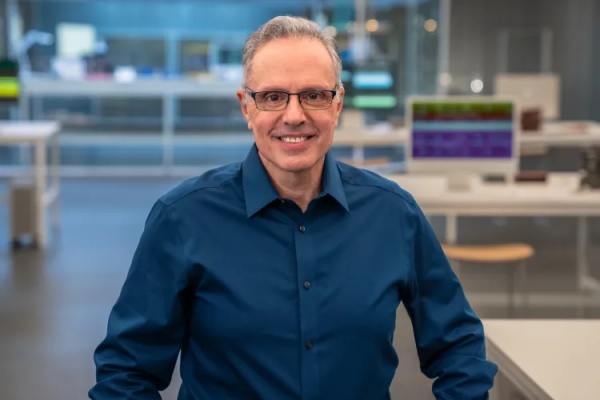
On May 19 local time, IT outlet 9to5Mac reported that Apple is pushing a restructuring of its hardware division centred on chief hardware executive Johny Srouji (조니 스루지). Srouji is said to be reshaping the organisation to speed product development while strengthening collaboration between the in-house silicon development group and product development teams.
The change follows an executive reshuffle Apple carried out last month. At the time, Apple announced that John Ternus would become chief executive officer from Sept. 1 and at the same time gave Srouji an expanded chief hardware executive role. Since then, Srouji has been overhauling the overall hardware division and redesigning the structure for developing next-generation products.
The core of the reorganisation is to more closely connect Apple's in-house chip strategy with its product development organisation. Apple has expanded the use of in-house designed Apple Silicon in iPhones, Macs and iPads in recent years. As a result, the importance of collaboration between the semiconductor design stage and the actual product development stage has grown, and this reorganisation is interpreted as reflecting that shift.
Apple is said to be seeking to raise both development speed and completeness by strengthening the connection between the silicon organisation that designs chips and the product development organisation that builds devices. The industry sees the possibility that this could speed up coordination of product launch schedules and responses to design changes.
A change is also expected in the role of the product design organisation. The existing product design organisation has focused on turning concepts created by the industrial design team into products that can be mass-produced. Srouji is said to be reorganising the process itself to speed the transition between the idea stage and the commercialisation stage.
A new organisation will also be created. Apple is forming a new team called Ecosystems Platforms and Partnerships and has appointed Matt Costello and Kevin Lynch to jointly lead it.
Kevin Lynch leads a special project related to robotics devices inside Apple, and Matt Costello has been in charge of the home products and audio business. The new organisation is expected by its name to handle device-to-device connectivity, platform operations and external cooperation structures, but its specific scope has not been disclosed.
Apple has already started work to further subdivide its hardware organisation. Srouji previously decided on a plan to divide the hardware organisation into 5 areas. The latest step is an extension of that, moving toward more finely divided development systems and clearer separation of responsibilities for each team.
The changes can be seen as an attempt by Apple to raise both product development speed and collaboration across organisations. In a structure where it must manage both in-house silicon and hardware completeness, narrowing the gap between the chip development team and product teams could directly affect the schedule and completeness of future new products. With a new platform organisation spanning robotics, home and audio added, attention is on whether Srouji’s way of running hardware will expand across Apple's overall next-generation device strategy.
 Jinju Hong
hongjj@d-today.co.kr
Jinju Hong
hongjj@d-today.co.kr