
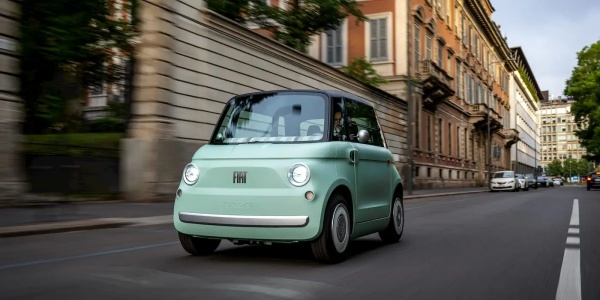
Stellantis has unveiled an ultra-low-cost small electric vehicle project aimed at the European market. With Chinese companies stepping up their push, it is moving to defend the mass-market EV segment by stressing local production in Europe and price competitiveness.
Electrek, an electric-vehicle specialist outlet, reported on May 19 that Stellantis plans to produce a new electric vehicle called the E-Car at its Pomigliano plant in Italy from 2028. The exact sale price was not disclosed, but an industry source cited by Reuters said the starting price is expected to be about 15,000 euros.
E-Car is an acronym for European, Emotional, Electric and Environmental friendliness. Stellantis Chief Executive Antonio Filosa (안토니오 필로사) said, "Consumers want the return of small, stylish cars produced in Europe." He added, "Demand is rising for models that offer both price competitiveness and environmental friendliness."
Stellantis defined the E-Car as "a groundbreaking, small and reasonably priced electric car". The company plans to apply new technologies secured through external partnerships to cut production costs and build a mass-production system.
The Pomigliano plant selected as the production base currently makes the Fiat Panda small car. Stellantis expects the E-Car rollout to help expand local production and stabilise employment. It also aims over the long term to reach full employment at the plant.
The project comes as competition in Europe for low-cost electric cars intensifies. Chinese companies including BYD have been rapidly expanding their market share in Europe by emphasising price competitiveness. BYD ranked No. 1 in electric-vehicle sales in the British market through April this year, helped by strong sales of low-priced models, the outlet reported.
Stellantis is also expanding cooperation with Chinese companies. The company recently announced plans to produce new electric vehicles for the European market by strengthening collaboration with Chinese EV maker Leapmotor. It also unveiled plans to produce Peugeot and Jeep electric cars in China and sell them in overseas markets from 2027.
The industry is also discussing the possibility of production-facility cooperation between Stellantis and BYD. Stella Li (스테라 리), a senior vice president at BYD, was asked at a London conference last month about the possibility of buying idle Stellantis plants and replied, "We are talking not only to Stellantis but also to several companies."
Stellantis' electric-vehicle strategy differs by region. The company recently cancelled some new EV projects and reflected a cost burden of about 22.3 billion euros as it adjusted its strategy. This has led to analysis that it is prioritising defending Europe's mass-market EV segment and restructuring its production system over expanding in the U.S. market.
Key points to watch are the launch timing and price competitiveness. Stellantis has scheduled mass production of the E-Car for 2028, but Chinese companies are already expanding sales of low-priced electric cars in Europe. The industry is watching whether Stellantis can combine local European production, price competitiveness and cooperation with Chinese companies to translate that into a real increase in sales.
 Jinju Hong
hongjj@d-today.co.kr
Jinju Hong
hongjj@d-today.co.kr