
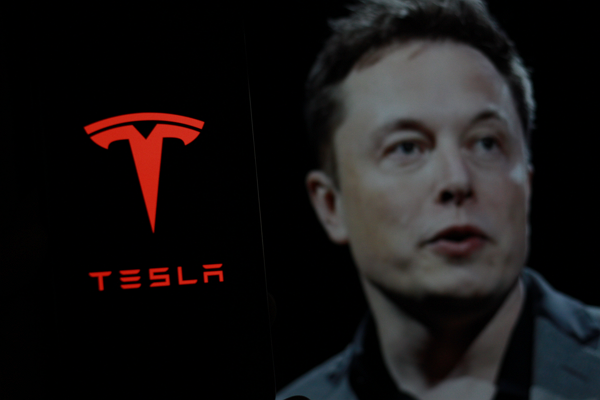
[DigitalToday reporter Yoonseo Lee] Elon Musk (일론 머스크), Tesla's CEO, again claimed that Tesla's unsupervised Full Self-Driving (FSD) would be widely operated in the United States by the end of this year.
Electrek, an electric vehicle outlet, reported on May 18 local time that Musk said in a video address at the Smart Mobility Summit in Tel Aviv that Tesla is operating vehicles in three Texas cities without safety staff or occupants, and that the service is likely to spread across the United States by year-end.
However, Tesla's current operating scale is limited. A robotaxi tracker counted fewer than 30 unsupervised vehicles in Austin, Dallas and Houston. The fleet in Dallas and Houston stands at about 5 and 6 vehicles, respectively. Expanding nationwide by year-end would require a large increase in vehicles and geographic coverage in the coming months, but verified operations remain at an early stage.
The issue is that Tesla's self-driving timeline has not been met in the past. In 2015, Musk said full self-driving would be possible within 2 years. In 2016, he vowed to stage a full self-driving demonstration from Los Angeles to New York by the end of 2017, but it did not happen. In 2019, he said more than 1 million robotaxis would be on the road by 2020, and in January 2025 he said unsupervised FSD would be launched by June 2025.
But the robotaxi service that began in Austin in June 2025 started with an in-car safety monitor. Musk later presented the timing of unsupervised FSD for consumer vehicles as "as early as the fourth quarter of 2026" at a first-quarter earnings release on April 1, 2026. He acknowledged at the time that there were issues with complex intersections, lane markings and weather. This latest remark again cites a year-end expansion less than a month later.
His safety explanations also differed. Musk said at the event that "the path for self-driving cars to become safer than humans is very clear," and that FSD would ultimately become "at least 10 times safer" than human driving. But 6 weeks earlier on X, formerly Twitter, he claimed that "FSD is already 10 times safer than a human-driven car, and the statistics are also clear."
Critics say Tesla's safety data also has limits in supporting such claims. Tesla's quarterly vehicle safety report counts only crashes in which airbags deployed. The U.S. National Highway Traffic Safety Administration includes all crashes reported to police. Another issue raised is that FSD and Autopilot are mainly used on highways, while the comparison baseline includes both urban and rural roads, making direct comparison difficult. Tesla halted the report for more than a year before resuming it, and the figures after its resumption showed Autopilot safety had instead worsened.
In this situation, the indicator the market watches is the number of vehicles actually in operation rather than statements. Tesla has been operating unsupervised vehicles since early this year, but the current scale is about 30 vehicles. For Musk's year-end expansion to be realized, vehicle numbers and service areas would have to expand rapidly at the same time. The debate over commercializing self-driving is expected for the time being to center on deployment speed and the reliability of disclosed data rather than schedule pledges.
 Yoonseo Lee
yslee@d-today.co.kr
Yoonseo Lee
yslee@d-today.co.kr